Where to Catch Crappie on Lake Millwood
Trying to pin down crappie on a sprawling, timber-filled lake like Millwood can feel like searching for a needle in a haystack, especially if you're not familiar with its unique underwater landscape. Many anglers get frustrated by the sheer amount of cover and the constantly changing water levels that affect where these speckled beauties are hiding. This guide is dedicated to cutting through that confusion, helping you understand Lake Millwood's crappie patterns, and pointing you toward the most productive spots so you can fill your cooler.
Understanding Lake Millwood's Crappie Habitat
Lake Millwood isn't your average open-water reservoir. It's a special place, a flooded timber wonderland that crappie absolutely adore, but it also presents a unique challenge for anglers. To consistently catch fish here, you really need to get into the mind of a crappie and understand why they choose certain areas over others.
The Unique Structure of Millwood Lake
Imagine a vast forest, then flood it. That's essentially Lake Millwood. Formed by the damming of the Little River, Saline River, and Cossatot River, its basins are littered with acres upon acres of standing timber, submerged stumps, and laydowns. This isn't just a nuisance; it's the defining feature of the lake and the primary reason it's such a crappie paradise. Crappie are ambush predators and absolutely thrive in cover, using it for protection from larger predators, as a place to hide from sunlight, and as a hunting ground for baitfish.
The lake itself is relatively shallow compared to some of Arkansas's other large impoundments, with average depths in many areas rarely exceeding 10-15 feet, though the old river channels can drop much deeper. The water clarity can vary dramatically depending on rainfall and time of year; often, it carries a stained, tannic color, especially upriver. This stained water often means crappie aren't as shy about shallower cover, even during bright daylight hours, unlike in clearer lakes where they might retreat to much deeper structure. Understanding this timber-dense, often stained environment is the first step to unlocking its crappie potential.
Seasonal Crappie Movements and Patterns
Crappie in Lake Millwood are highly migratory, not in the sense of traveling huge distances, but in their vertical and horizontal movements related to water temperature and their spawning cycle. Knowing these patterns is key to finding them throughout the year.
- Pre-Spawn (Late Winter to Early Spring): As water temperatures begin to climb into the upper 40s and low 50s, crappie start to stage in preparation for spawning. They'll often move from deeper wintering holes into the mouths of creeks and major coves, seeking out submerged timber and brush piles near these transition zones. They're still somewhat deep, perhaps 10-15 feet, but they're actively feeding and becoming more aggressive. This is a fantastic time for larger, slab crappie.
- Spawn (Spring, generally March-May): When water temperatures hit the magical 60-68 degree Fahrenheit range, the crappie move shallow to spawn. They'll be found in incredibly shallow water, sometimes just 1-3 feet deep, around dense cover like cypress trees, buck brush, and other flooded vegetation in protected coves and shallow creek arms. This is when they're most concentrated and can be caught in large numbers, though they can be finicky if spooked. Understanding When Do Crappie Spawn in Arkansas is critical for timing your trip.
- Post-Spawn (Late Spring to Early Summer): After the spawn, crappie often disperse and can be a bit harder to locate. They'll move slightly deeper, often to the edges of the spawning flats, associating with timber lines and secondary creek channels. They're recovering from spawning and might not be as aggressive, but they're still catchable. Look for them holding tighter to cover in slightly deeper water than during the peak spawn.
- Summer (Late Spring to Early Fall): During the hotter months, crappie will retreat to deeper, cooler water. They'll often suspend over or near the old river channels, especially where there's standing timber, submerged humps, or brush piles providing shade and ambush points. Finding thermoclines or areas with good dissolved oxygen is important. They might also move into deeper creek channels during this time.
- Winter (Late Fall to Early Winter): As water temperatures drop, crappie become less active but often congregate in large schools in deep holes, along river channel bends, and around very dense, deep timber. They might suspend at specific depths, and vertical jigging directly over them can be very effective. They feed less frequently, but when you find a school, you can often catch many.
Prime Crappie Hotspots on Lake Millwood
Now that we understand the crappie's mindset and seasonal movements, let's talk about specific types of locations on Lake Millwood that consistently hold fish. This isn't about giving you exact GPS coordinates (those change with water levels and fishing pressure!), but rather teaching you what to look for in various parts of the lake.
Targeting the Timbered Areas and Submerged Brush Piles
Lake Millwood is famous for its standing timber, and this is where many of the best crappie fishing opportunities lie. The key is to distinguish between just "timber" and productive timber.
- Standing Timber: Focus on areas where timber is denser, forming distinct lines or clumps, rather than sparse, scattered trees. The edges of these timber fields, where they transition to open water or a creek channel, are often hot. Also, look for larger diameter trees; these often indicate older growth and more stable, long-term habitat. The cypress trees, especially in the shallower northern parts of the lake and in the Little River arm, are classic crappie magnets during the spawn. You might find a single cypress tree in a foot of water holding dozens of crappie.
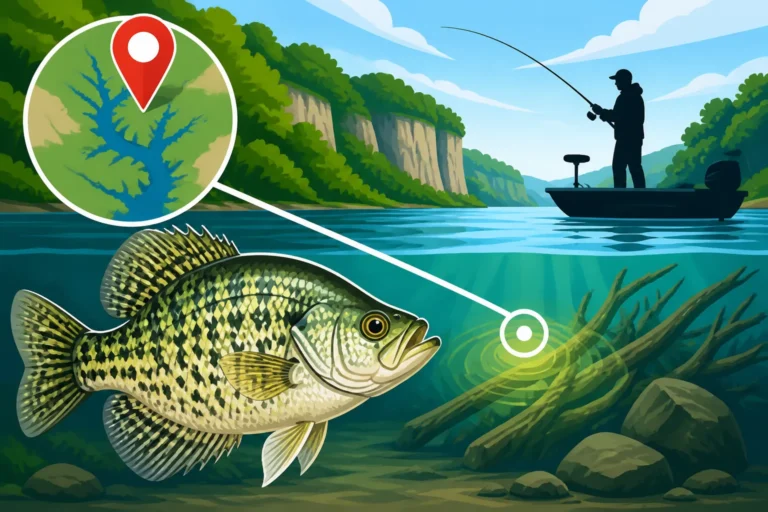
- Submerged Brush Piles: These are goldmines. Many local anglers and the AGFC (Arkansas Game and Fish Commission) place brush piles, and crappie flock to them. These are essentially artificial reefs that concentrate baitfish and provide dense cover. They're usually found near channel edges, points, or humps. The challenge is finding them. This is where good electronics, knowledge of local hotspots, or even a guide comes into play. When you locate a brush pile, approach quietly and fish it thoroughly, as these spots can hold multiple schools of crappie at different depths within the brush. For more detailed insights, you'll want to check out some Crappie Fishing Tips for Arkansas Timber Lakes.
Creek Channels and River Runs
The three major river systems feeding Millwood – the Little, Saline, and Cossatot Rivers – create distinct channels that snake through the lake. These channels are crucial crappie highways and holding areas.
- Channel Bends and Intersections: Crappie often stack up on the outside bends of these submerged channels, particularly where there's additional cover like timber or brush. Look for points that extend into the channel or where a secondary creek channel merges with a main river channel. These confluences create natural ambush points and current breaks that crappie adore. The Little River arm, especially, has numerous well-defined channels with abundant standing timber along their edges.
- Old River Beds: Even in the wider, more lake-like sections, the remnants of the original river beds offer deeper water. During summer and winter, crappie will often suspend along the drops or over the deepest parts of these old beds. Use your sonar to identify these depressions and any associated cover. It's often a game of finding the right depth where the crappie are holding.
Dam and Bridge Structures
Man-made structures, while fewer and farther between on Millwood compared to some lakes, can still be key crappie attractors, offering deep water access and hard cover.
- Millwood Dam: While fishing directly on the dam can be restricted, the areas immediately surrounding it, especially where deeper water is consistent, can hold crappie. The rip-rap on the dam face itself might attract crappie during certain times, providing a different type of cover. Always check local regulations before fishing near the dam.
- Bridge Pilings: Any bridge crossings over the main river arms, such as those on Highway 32 or Highway 29, will have pilings that extend into the water. These act as vertical cover, attracting baitfish and providing structure for crappie, particularly when they're suspending. The shade these structures cast can also be a significant draw on sunny days. Fish all sides of the pilings and at varying depths.
Essential Techniques and Baits for Millwood Crappie
Knowing where the crappie are is only half the battle; knowing how to catch them is the other. Lake Millwood's unique environment often calls for specific tactics to navigate its challenging waters and extract those slabs.
Jigging and Spider Rigging Strategies
These two techniques are probably the most popular and effective methods for crappie fishing on Lake Millwood.
- Jigging: This is a versatile method, especially effective for targeting individual pieces of cover or specific depths. Whether you're vertical jigging over a brush pile, casting to a cypress tree, or dipping a jig into standing timber, precision is key. Use lightweight jigs (1/16 oz to 1/8 oz) with small plastic bodies or hair jigs. Colors vary, but chartreuse, white, black/chartreuse, and blue/silver are common producers. Experiment with different retrieve speeds and depths until you find what the fish want. Sometimes a subtle twitch, other times a slow fall, is all it takes. For deeper dives into setups, look into How to Rig a Jig for Crappie Fishing.
- Spider Rigging: This technique is a fantastic way to cover water and present multiple baits at different depths simultaneously, making it perfect for sprawling timber fields or tracing channel edges. Using multiple long rods (often 6-12 feet or more) extended around the boat, you drift or slowly troll, each rod presenting a jig or a minnow rig. This allows you to find the "active" depth quickly. On Lake Millwood, where crappie might be suspended among acres of standing timber, spider rigging lets you present baits to many fish without having to pinpoint each individual tree. Just be mindful of snagging in dense timber! This method is particularly effective for finding schools of crappie in the pre-spawn, summer, and winter months.
Live Bait vs. Artificial Lures
Both live bait and artificial lures have their place on Lake Millwood, and often the most successful anglers combine the two.
- Live Bait (Minnows): It's tough to beat a live minnow, especially when crappie are finicky or when you're probing deep timber. Small shiner minnows are the go-to bait. You can fish them under a bobber in shallow cover, drop them on a single hook or a jig head into brush piles, or use them on a spider rig. Minnows offer scent and natural movement, which can often entice hesitant crappie. Read up on Best Live Bait for Crappie Fishing for more details.
- Artificial Lures: Jigs are the most common artificial lure. Small plastic tube jigs, grub tails, and swimbaits in sizes from 1/32 oz to 1/8 oz are all effective. Experiment with colors based on water clarity and sunlight – brighter colors (chartreuse, pink) in stained water or low light, and more natural colors (white, pearl, clear/glitter) in clearer conditions. Small spinnerbaits or roadrunners can also be deadly, especially during active feeding periods. Sometimes a small crappie crankbait trolled along channel edges can surprise you.
Reading Your Electronics and Water Conditions
Your boat's electronics are your best friend on Lake Millwood, especially with all that timber.
- Sonar/Fishfinder: Learn to interpret your sonar. It's essential for locating submerged timber, identifying brush piles, finding baitfish schools, and most importantly, seeing crappie suspended in the water column. Look for arches or dots (depending on your unit) near structure. Pay attention to the depth at which the fish are holding, as this will inform your presentation. Side imaging or down imaging can be particularly helpful for navigating through timber and spotting brush piles off to the sides of your boat.
- Water Temperature and Clarity: Keep an eye on your water temperature gauge. Crappie are highly sensitive to temperature changes, and their movements are dictated by it, as discussed in the seasonal patterns. Clarity also matters. In clear water, fish might be deeper or hold tighter to cover; in stained water, they might be shallower and more aggressive. A good Lake Millwood Fishing Guide in Southwest Arkansas will often know exactly how these conditions are currently affecting the bite.
Tips for a Successful Crappie Trip on Millwood
Lake Millwood is a challenging but incredibly rewarding crappie fishery. A little preparation and local knowledge can significantly boost your success.
Best Times of Day and Year to Go
Timing is everything, and Lake Millwood is no exception when it comes to crappie.
- Early Morning and Late Evening: Like most fish, crappie are often most active during low-light conditions. These times provide cover from the sun and typically see cooler water temperatures, which can make crappie more willing to feed. Fishing during dawn and dusk, or even into the night during summer, can be highly productive.
- Spring and Fall: While you can catch crappie year-round, spring (pre-spawn and spawn) and fall (when water temperatures are cooling and crappie are feeding heavily before winter) are often considered the prime times. During spring, crappie are concentrated in shallow waters for spawning. In the fall, they're aggressively feeding on baitfish to build up fat reserves. If you're looking for the absolute best window, focusing on Best Time to Catch Crappie in Arkansas around Millwood's specific conditions will be key.
Navigating Lake Millwood's Unique Challenges
Lake Millwood's defining feature – its timber – also makes it incredibly challenging to navigate.
- Watch for Stumps and Submerged Trees: This cannot be stressed enough. Millwood is notorious for stumps and standing timber that can damage lower units. Always exercise extreme caution, especially when running at speed. Stay within marked channels, or if venturing into timbered areas, go very slowly, using your trolling motor and keeping a sharp eye on your electronics and even a pair of polarized sunglasses to spot hazards.
- Fluctuating Water Levels: Water levels can change significantly on Millwood, exposing new hazards or submerging old ones. Always check current lake levels before you go. What was a safe path last week might be treacherous this week. This also affects where crappie are holding; a brush pile that was productive at 12 feet might be completely dry or much deeper than expected with a few feet of water fluctuation.
Local Insights and Guided Trip Benefits
Even with all the information in the world, there's no substitute for local knowledge, especially on a lake as unique as Millwood.
- Talk to Locals: Spend some time at local bait shops like Millwood Lake Resort & Marina or Swaha Marina. These spots are often hubs for local anglers who are usually happy to share general patterns or recent hotspots, especially if you're buying bait or tackle. They might give you that one tip about a specific creek arm or the depth the crappie are biting at.
- Consider a Guide: If you're unfamiliar with Lake Millwood or want to maximize your chances, booking a local crappie guide can be an invaluable investment. A good guide knows the lake like the back of their hand – where the brush piles are, the current crappie patterns, and how to navigate the timber safely. They'll have all the right gear, too. Websites like FishingBooker are excellent resources for finding reputable, experienced crappie guides on Lake Millwood who can help you have a productive and safe trip. They can teach you the ropes and put you on fish faster than days of trial and error. This is especially true if you're hoping to experience one of the Best Crappie Lakes in Arkansas for the first time.
| Season | Water Temp (approx.) | Crappie Depth/Location | Recommended Techniques | Typical Baits |
|---|---|---|---|---|
| Pre-Spawn | 48-59°F | Mouths of creeks, channel bends, brush 10-15 ft deep | Spider rigging, vertical jigging | Minnows, 1/16 oz jigs |
| Spawn | 60-68°F | Shallow coves, cypress trees, buck brush 1-5 ft deep | Dipping jigs, slip bobbers | Small jigs (1/32-1/16 oz), minnows |
| Post-Spawn | 69-75°F | Edges of spawning flats, secondary channels 8-12 ft | Casting jigs, slow trolling | Jigs, minnows |
| Summer | 75°F+ | Deep channels, suspended over timber 15-25+ ft deep | Deep spider rigging, vertical jigging, trolling | Minnows, heavier jigs, crankbaits |
| Winter | Below 48°F | Deep holes, main channel bends, dense timber 20-35+ ft | Vertical jigging, slow trolling (spider rigging) | Minnows, 1/8 oz jigs |
Remember, the Crappie Size and Daily Limit in Arkansas typically states that crappie must be 9 inches or longer to keep, and the statewide daily limit is 20 fish. Always double-check current regulations before you head out, as exceptions can apply to specific lakes or areas, though Lake Millwood usually follows the statewide rules.
Disclaimer
Fishing conditions and regulations in Arkansas can change. Always consult the latest Arkansas Game and Fish Commission (AGFC) publications or website before heading out on the water. This guide is for informational purposes only and does not constitute legal advice or an exhaustive list of all regulations or fishing spots.