Where to Catch Crappie on Lake Conway
Lake Conway is a true gem for crappie anglers in Arkansas, but let's be honest, this vast, timber-filled lake can feel like a labyrinth if you're not sure where to start. It's easy to get overwhelmed by all the cover, making it tough to pinpoint those schools of crappie. This guide is designed to cut through the confusion, breaking down the best strategies and specific spots to help you consistently find and catch crappie on this renowned central Arkansas fishery.
Understanding Lake Conway's Unique Crappie Habitat
Lake Conway isn't your typical reservoir; it's a cypress-studded, timber-heavy lake, and that's precisely what makes it such a phenomenal crappie fishery. These fish absolutely thrive in cover, and Conway has it in spades. Getting a handle on how crappie relate to this unique environment throughout the year is your first step to consistent success.
The Importance of Timber and Cover
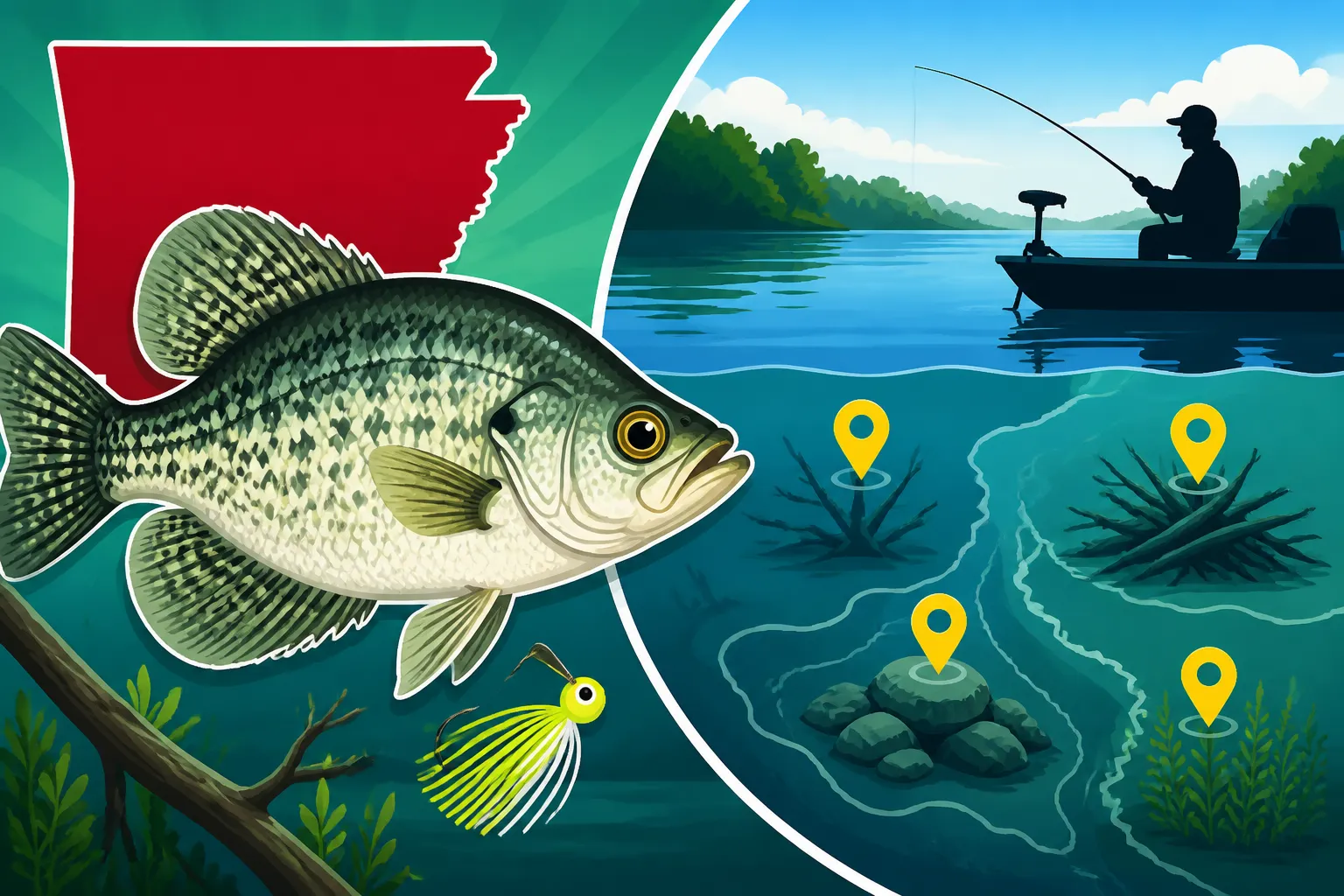
If there's one thing you need to remember about crappie in Lake Conway, it's this: they love wood. We're talking stumps, fallen trees, cypress trees, and dense brush piles. This isn't just a preference; it's a survival strategy. The timber offers them crucial protection from predators like bass and striped bass, giving them a safe haven. More importantly, these woody jungles are prime ambush points where crappie can hide and dart out to feed on unsuspecting baitfish. These areas also hold a rich ecosystem, providing shelter for the very baitfish and invertebrates that crappie feed on.
When you're out on the water, you'll see a lot of visible timber, especially in the shallower bays and coves. But don't forget about the submerged stuff! Old roadbeds, flooded timber from when the lake was impounded, and intentionally placed brush piles by anglers and the Arkansas Game and Fish Commission all serve as irresistible magnets for crappie. Approaching these areas requires a bit of finesse. You'll want to present your baits slowly and deliberately, allowing the crappie time to find and strike. Using snag-resistant rigs, like weedless jigs or single hook presentations, will save you a lot of frustration and lost tackle in these dense environments. It's a dance between getting your bait in the strike zone and avoiding getting hung up, but mastering it is key to unlocking Conway's crappie potential.
Seasonal Movements and Depths
Crappie, like most fish, are highly influenced by water temperature and the availability of food. Their locations and preferred depths will shift dramatically throughout the year on Lake Conway. Understanding these seasonal patterns is crucial for knowing where to cast your line.
Winter Crappie Patterns
When the water temperatures drop in winter, crappie tend to move towards deeper water, often suspending in main lake basins or congregating along the edges of old creek channels. They're still going to be relating to structure, but it might be more subtle, like submerged humps, deep brush piles, or the drops along the old river channel. Their metabolism slows down, so their bites can be incredibly subtle, feeling more like a slight weight on your line than an aggressive strike. This is a time when good electronics really shine, helping you locate these deeper schools and the structure they're holding to. You'll often find them schooled tightly, so once you find one, you're likely to find more.
Spring Crappie Spawn
Ah, spring! This is arguably the most anticipated time for crappie anglers. As water temperatures begin to rise, typically into the high 50s and 60s Fahrenheit, crappie begin their annual migration from deeper wintering holes into shallower, protected waters to spawn. This pre-spawn movement sees them staging in transition areas, often at the mouths of coves or along subtle breaks leading into spawning flats. When the water hits that magic temperature, usually in the low 60s, they move directly into the shallowest water they can find, often around emergent vegetation, lily pads, cypress knees, and flooded timber. This is when you can find them in just a few feet of water, making them accessible to bank anglers and boaters alike. The spawn can be a frenzy of activity, but it's important to remember that it doesn't happen all at once. It's a staggered event, often influenced by specific water temperatures in different parts of the lake. For more on this critical period, you might want to check out our detailed guide on When Do Crappie Spawn in Arkansas.
Summer Crappie Retreat
As the dog days of summer arrive and water temperatures climb, crappie generally retreat back to deeper, cooler waters. They'll seek out thermal refuges, often congregating in the cooler water found in the deeper portions of the lake. This doesn't mean they disappear; it just means you have to adjust your tactics. They'll still relate strongly to cover, but now you'll be looking for those deep brush piles, submerged creek channels, and the shady side of dense timber lines in 10-20 feet of water, or even deeper depending on conditions. Early mornings and late evenings can offer opportunities in slightly shallower areas as temperatures momentarily cool, but midday heat often pushes them down.
Fall Crappie Feast
Fall is another fantastic time to target crappie on Lake Conway. As water temperatures start to cool from their summer highs, crappie become more active again, often schooling up and moving aggressively to feed in preparation for winter. This is a period of transition, and crappie can be found anywhere from shallow timber to deeper creek channels, following schools of baitfish that are also on the move. You might find them suspended in open water or tightly packed around submerged brush. Fall can offer some of the most consistent and exciting crappie fishing as the fish are often less finicky and more willing to chase a bait. It's a great time to experiment with both shallow and deep presentations until you dial in on their preferred depth for that particular day.
Top Crappie Hotspots on Lake Conway
Lake Conway is a sprawling lake, but certain areas consistently hold more crappie due to their unique features and abundance of preferred habitat. Knowing these hotspots can save you a lot of time and lead to more productive fishing trips.
The North and East Sides: Abundant Timber and Flats
The northern and eastern sections of Lake Conway are arguably some of the most productive crappie grounds, and for good reason. This area is characterized by vast expanses of flooded timber, numerous cypress trees, and shallow flats that transition into deeper creek channels. Key areas to focus on include the arms of Gold Creek, Palarm Creek, and Beaverdam Creek. These creeks feed into the main body of the lake, bringing nutrients and attracting baitfish, which in turn draw in crappie.
The flats leading into these creek arms are particularly good during the spring spawn, offering endless acres of shallow, warm water and woody cover for crappie to nest. Later in the year, these same areas, particularly their deeper edges and the numerous cypress trees, continue to hold fish that are seeking shelter and food. Navigating these heavily wooded areas requires patience and careful boat handling. A trolling motor is indispensable for slowly working through the timber, and a good understanding of your fish finder will help you pinpoint submerged stumps and brush piles that might not be visible from the surface. Many local anglers will also tell you that these areas are great for working jigging spoons or live minnows vertically around the thickest cover, carefully extracting crappie that are tucked deep within the wood.
The Main Lake Basin and Old River Channel
While Lake Conway is known for its shallow, timbered coves, the main lake basin and the remnants of the old Arkansas River channel that wind through it offer entirely different opportunities, especially during the colder months or when crappie are schooling. These deeper sections provide the thermal stability and depth that crappie seek when surface waters are too hot or too cold. The old river channel itself is a highway for fish, and its ledges and bends are natural congregating points.
During winter, you'll often find crappie suspending in the open water of the main basin, but always relating to some form of structure beneath them – be it a submerged hump, a large brush pile, or the old channel edge. This is where modern electronics like side imaging and down imaging become invaluable. They allow you to scan wide swaths of water to identify submerged features and even spot individual crappie schools before you ever drop a line. Once you mark a school, you can then position your boat directly over them for vertical presentations. Don't be afraid to explore the deeper areas around the causeway on Highway 89, as these can be major thoroughfares and holding areas for crappie as they move between different parts of the lake.
Hidden Gems: Bridge Pilings and Roadbeds
Sometimes the best spots aren't always the most obvious. Lake Conway has its share of "man-made" structures that act as crappie magnets, and bridge pilings and submerged roadbeds are prime examples. Crappie are drawn to bridge pilings for several reasons: they provide shade from the sun, break up any current, and accumulate baitfish, creating a perfect ambush point. The Highway 89 causeway, which effectively divides the lake, has numerous pilings that can hold impressive numbers of crappie, especially during times when fish are transitioning or seeking refuge.
Even more intriguing are the submerged roadbeds and old foundations that exist throughout the lake from before it was flooded. These underwater structures might not be visible, but they create distinct changes in bottom contour and provide solid cover in otherwise featureless areas. Many of these are often overlooked by casual anglers, but savvy locals know that these can be highly productive crappie spots. Using your depth finder to locate these submerged anomalies is key. Once you find one, a careful exploration with jigs or minnows can yield excellent results. These hidden gems are like secret fishing holes, rewarding those who take the time to find them.
Effective Crappie Fishing Techniques for Lake Conway
Knowing where the crappie are is only half the battle; the other half is knowing how to catch them. Lake Conway's diverse habitat calls for a range of techniques, from precise presentations in heavy cover to covering water efficiently.
Vertical Jigging and Dock Shooting
For anglers targeting crappie in Lake Conway's dense timber and around specific structures, vertical jigging is an absolute must. This technique involves positioning your boat directly over a brush pile, stump, or submerged timber and dropping your jig or minnow straight down into the cover. The goal is to keep your bait in the strike zone, often just above or within the structure, without getting snagged. Small, lightweight jigs (1/16 to 1/8 ounce) with soft plastic bodies in colors like chartreuse, white, or black-and-chartreuse work wonders here. The retrieve is usually a slow lift-and-drop, or just holding the bait still, letting the crappie find it. A sensitive rod is critical for detecting those subtle "thumps" or slight weight changes that indicate a bite.
"Dock shooting" is another fantastic technique for accessing crappie in tight, hard-to-reach spots, like under boat docks, overhanging trees, or deep into thick cypress knees. It involves bending your rod tip and holding the jig between your thumb and forefinger, then releasing the jig and letting the rod spring back, propelling the jig like a slingshot into those inaccessible areas. It takes practice, but it's incredibly effective for reaching crappie that other anglers can't touch. For Lake Conway, where docks and overhanging vegetation are plentiful, mastering this can give you a significant advantage. Remember to vary your jig colors based on the water clarity and light conditions; brighter colors work well in stained water, while more natural hues might be better in clearer spots.
Spider Rigging and Trolling
When crappie are spread out over flats, along channel edges, or in deeper open water, covering ground efficiently becomes paramount. This is where "spider rigging" and trolling come into play. Spider rigging involves deploying multiple rods (often 4-8 or more) from the front or sides of your boat, fanned out to cover a wide area. Each rod typically has a different depth setting and bait presentation, allowing you to quickly determine the crappie's preferred depth and offering. You then slowly troll (often using a precisely controlled electric trolling motor) along contours, creek channels, or across flats. This method is incredibly effective for locating scattered schools of crappie, particularly when they're actively feeding.
Trolling, in its more traditional sense, can also be highly productive on Lake Conway, especially in the main lake basin or larger, more open coves. You might troll a series of jigs or small crankbaits at various depths behind the boat, again covering a lot of water until you find where the fish are holding. Live minnows, either alone or tipped onto a jig head, are perennial favorites for both spider rigging and trolling, offering natural scent and action that crappie can't resist. Experiment with speed and direction until you find the pattern that triggers the most strikes.
Live Bait Presentations
While artificial lures are effective, sometimes nothing beats the appeal of live bait for Lake Conway crappie. The classic minnow under a bobber is a time-tested technique that continues to produce fish year after year. A small golden shiner or crappie minnow suspended under a sensitive slip bobber is incredibly versatile. The slip bobber allows you to easily adjust your depth, which is crucial for targeting crappie suspended at specific depths or when fishing in and around timber. You can set the bobber stop just above the known depth of brush piles or over submerged structures, ensuring your minnow is presented right in their face.
Using minnows on jig heads offers another excellent live bait presentation. Instead of just a plain hook, thread a minnow onto a small jig head. The jig adds a bit of weight for casting or vertical presentations, and its color can provide an additional visual attractor. The minnow itself provides irresistible scent and natural movement. This setup is particularly effective when working individual pieces of cover or when crappie are finicky and need that extra enticement. For more insights on this classic bait, you might enjoy our article on the Best Live Bait for Crappie Fishing. Remember, patience is a virtue with live bait; let the minnow do its work.
Gear and Essential Tips for Lake Conway Crappie
Having the right equipment and a few smart strategies can drastically improve your crappie fishing experience on Lake Conway. From the sensitivity of your rod to the intelligence of your electronics, every piece plays a role in your success.
Rods, Reels, and Line
For crappie fishing on Lake Conway, sensitivity is paramount. You'll want to opt for light-action or ultralight spinning rods, typically in the 6- to 7-foot range, with a fast or extra-fast tip. This sensitive tip allows you to detect even the most subtle bites, which often feel like a slight "tick" or just added weight on your line, especially when crappie are suspended or sluggish. Pair these rods with small, lightweight spinning reels spooled with 4- to 6-pound test monofilament or braided line. While braid offers incredible sensitivity and strength, many anglers prefer a monofilament main line for its stretch, which can act as a shock absorber against sudden crappie surges and help prevent pulling the hook. If you use braid, a short fluorocarbon leader (2-4 feet) can be beneficial for its invisibility in clearer water. For spider rigging, longer crappie-specific rods, often up to 12-16 feet, are used to spread baits out and cover a wider area. These specialized rods also have sensitive tips but enough backbone to handle multiple fish.
Electronics and Navigation
On a lake as complex and timber-filled as Lake Conway, good electronics aren't just a luxury; they're almost a necessity for consistent crappie success. A reliable fish finder with good depth, side-imaging, and down-imaging capabilities will transform your fishing. You can use it to pinpoint submerged brush piles, identify old creek channels and roadbeds that are crappie magnets, and even mark individual fish or schools of crappie. Learning to interpret the arches and blobs on your screen can lead you directly to where the fish are hiding.
GPS capabilities, often integrated into modern fish finders, are equally important. Lake Conway has so much cover that it's easy to get disoriented, especially in the thickest timber. GPS allows you to mark productive hotspots, saving them for future trips, and helps you navigate safely through the maze of cypress trees and stumps. Modern mapping features can even show you contour lines, old riverbeds, and other significant underwater features that might not be visible from the surface. Investing time in learning how to use your electronics effectively will pay dividends in crappie catches.
Best Practices for Success
Beyond the gear, a few best practices will set you up for success on Lake Conway. First and foremost, practice stealth. Crappie can be skittish, especially in shallow, clear water. Approach your desired fishing spots quietly, using your trolling motor sparingly or relying on paddling if in a kayak or canoe. Avoid banging tackle boxes or making unnecessary noise.
Second, always be willing to experiment. Crappie can be incredibly finicky. If a certain depth, bait color, or retrieve speed isn't working, don't be afraid to change it up. Try different jig colors, switch from a minnow to a plastic, or adjust your depth by a foot or two. Sometimes the smallest change can make all the difference. Remember the Crappie must be 9 inches or longer to keep in Arkansas, and the Statewide crappie daily limit is 20 fish in most Arkansas waters, so always have a ruler handy and respect those limits.
Finally, consider tapping into local expertise. If you're new to Lake Conway or struggling to find the bite, hiring a local guide can jumpstart your success. They know the lake's nuances, the current patterns, and the best spots. Services like FishingBooker can connect you with experienced crappie guides who specialize in Lake Conway, offering invaluable insights and helping you learn the ropes quickly. This can be especially beneficial if you're planning a trip around peak times like the spring spawn and want to maximize your chances.
| Season | Typical Crappie Location | Recommended Techniques | Primary Bait/Lure |
|---|---|---|---|
| Winter | Deeper channels, main lake basin, deep brush piles, old channel edges | Vertical Jigging, Slow Trolling, Suspended Minnows | Small jigs (1/16 oz), Minnows |
| Spring | Shallow timber, cypress trees, lily pads, coves, protected bays | Vertical Jigging, Casting Jigs, Bobber & Minnow | Small jigs (1/32-1/16 oz), Minnows, Crappie Tubes |
| Summer | Deep brush piles, submerged creek channels, main lake basin timber | Vertical Jigging, Spider Rigging (deep), Trolling | Minnows, Jigs, Small Crankbaits |
| Fall | Transition areas, main lake basin, deeper timber, creek channels | Spider Rigging, Trolling, Vertical Jigging, Casting | Minnows, Jigs, Small Crankbaits, Blade Baits |
Disclaimer
Fishing conditions and regulations in Arkansas can change. Always consult the latest Arkansas Game and Fish Commission regulations before heading out. This guide provides general information and recommendations, but local conditions, weather, and fish behavior can vary. Stay safe and always practice responsible angling.