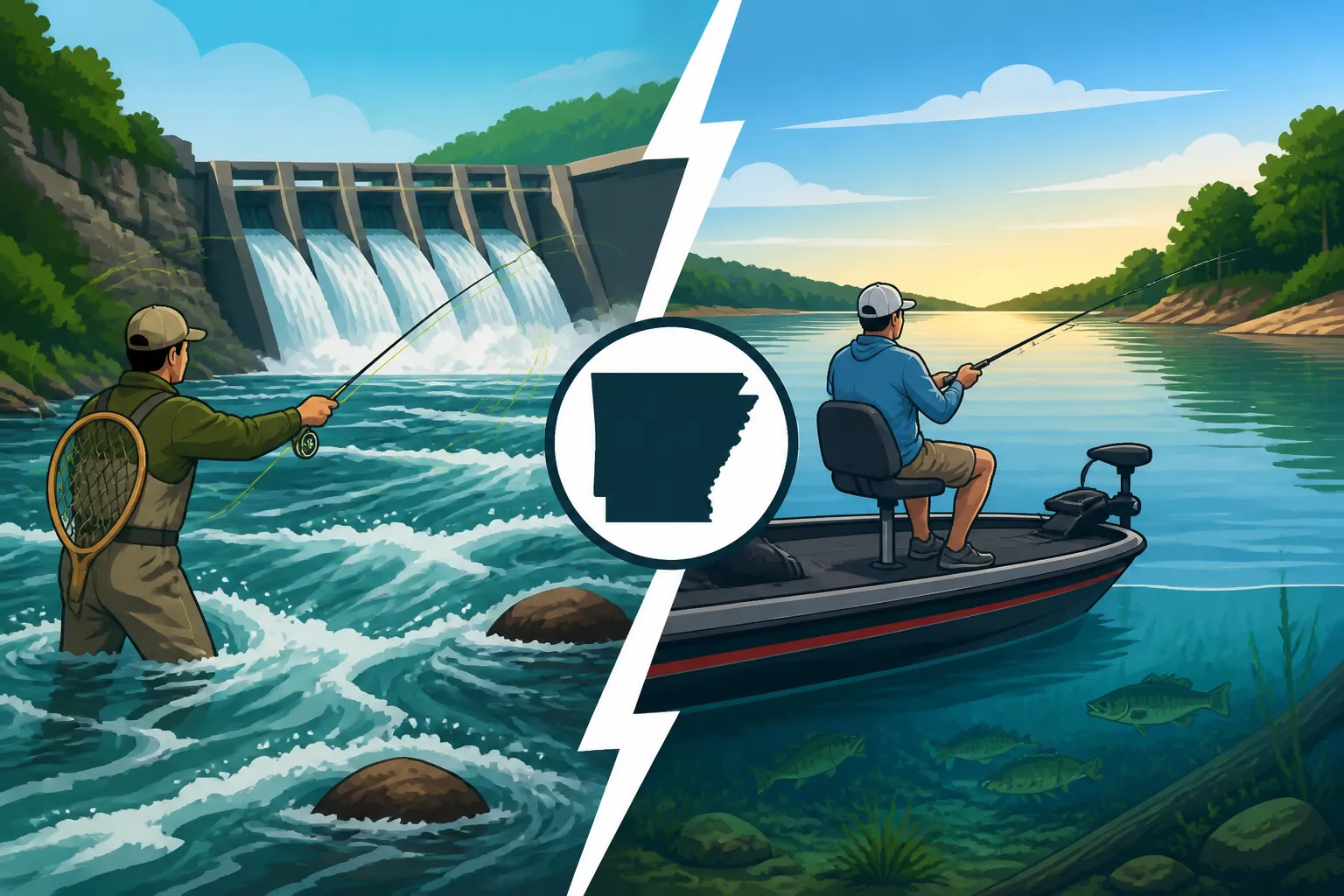
What’s different about fishing the Bull Shoals tailwater versus the lake?
Fishing in Arkansas is a diverse and rewarding experience, but sometimes, the sheer variety of our waters can throw even seasoned anglers for a loop. One common point of confusion arises when comparing the vast expanse of Bull Shoals Lake with the specific, flowing environment of its tailwater, the White River below the dam. Many folks assume "fishing Bull Shoals" covers it all, but let me tell you, these two spots are chalk and cheese, offering completely different challenges and rewards. This guide will walk you through the distinct characteristics of each, helping you understand precisely what to expect so you can gear up for success, whether you're targeting monster lake dwellers or wily river trout.
Understanding the Fundamental Differences
When you talk about fishing Bull Shoals, you're really talking about two distinct ecosystems: the immense impoundment of Bull Shoals Lake itself, and the famous White River tailwater that flows out from its depths. It’s easy to think they’re similar because of their proximity, but honestly, they’re worlds apart in terms of environment, the fish you'll find, and the techniques you'll need to employ. Ignoring these differences is a surefire way to have a frustrating day on the water, whether you're hoping for bass and only finding trout, or vice-versa.
Bull Shoals Lake: A Vast, Multi-Species Haven
Bull Shoals Lake is one of the largest lakes in the Ozarks, a sprawling body of water formed by the damming of the White River. It's a deep, clear, and absolutely gorgeous reservoir that spans across the Arkansas-Missouri border. This lake is a true multi-species paradise, offering anglers a chance to hook into an incredible array of fish. Think about those classic lake fishing experiences: cruising across open water, exploring countless coves and points, or finding submerged timber and rock piles. The lake’s vastness means there’s always a new spot to discover, and the fishing opportunities are as diverse as its geography.
The water temperature in the lake fluctuates dramatically with the seasons, from chilly winter lows to warm summer highs. This seasonal change dictates the behavior of the fish, moving them from shallow spawning beds in spring to deep thermoclines in summer, and back to shallower feeding grounds in fall. Understanding these seasonal patterns is key to successful fishing on the lake. You’ll find anglers targeting everything from trophy largemouth bass lurking in brush piles to schools of crappie hiding in standing timber. Walleye are a popular target in deeper waters, and for those seeking a real fight, the lake is renowned for its colossal striped bass, which can grow to truly impressive sizes.
The White River Tailwater: A Coldwater Trout Fishery
Once the water passes through the Bull Shoals Dam, it transforms into the famous White River tailwater, a completely different beast. This section of the river, especially the first several miles below the dam, is a premier coldwater trout fishery. The water released from the bottom of the dam comes from the deepest, coldest parts of the lake, maintaining a consistent, icy temperature year-round (often in the low 50s Fahrenheit). This makes it inhospitable for many warmwater lake species but absolutely perfect for trout.
The tailwater is characterized by its strong, often unpredictable currents, which are dictated by the power generation schedule of the dam. When the generators are running, the river can swell and flow swiftly, creating challenging but productive conditions for drift fishing or fly fishing from a boat. When the generators are off, the water levels drop, and the current slows, opening up incredible opportunities for wade fishing in spots that are usually underwater. This constant flux means that understanding the generation schedule is paramount to safety and success on the river. It's a completely different ballgame from the relatively calm waters of the lake, demanding a keen awareness of your surroundings and the river's dynamic nature.
Divergent Fish Species and Habitat
The most glaring difference between fishing Bull Shoals Lake and its tailwater is undoubtedly the primary target species and the environments they call home. While there might be some overlap in species like smallmouth bass in certain transition areas, for the most part, you'll be dealing with entirely different fish populations requiring specialized approaches.
Lake Species: Bass, Crappie, Stripers, and More
Bull Shoals Lake is a warmwater fishery (though it can get cold, the overall ecosystem supports warmwater species). Anglers here mostly focus on various types of bass, including largemouth bass, smallmouth bass, and spotted bass (often called Kentucky bass). Each has its preferred habitat: largemouth often hug structure like submerged trees and brush, smallmouth prefer rocky points and bluff ends, and spotted bass can be found in a mix of both. Crappie are also abundant, schooling around standing timber, brush piles, and docks, particularly during their spring spawn. You'll find many anglers practicing "Crappie Jigging Basics for Beginners" here.
Beyond these popular game fish, Bull Shoals Lake is famous for its monster striped bass. These powerful fish are often found in open water, chasing schools of baitfish, and catching one is an unforgettable experience. Catfish, walleye, and various panfish like bluegill and sunfish also thrive in the lake. The sheer size and depth of the lake mean fish can be found from the shallowest coves to the deepest submerged channels, offering endless exploration. The diverse structures, from rocky bluffs to sandy flats and flooded timber, provide a rich tapestry of habitats.
Tailwater Species: The Realm of Trout
The White River tailwater below Bull Shoals Dam is a coldwater trout fishery, pure and simple. The Arkansas Game and Fish Commission (AGFC) actively manages this section, stocking it regularly with rainbow trout, and it's also home to a thriving population of wild brown trout. You might even encounter cutthroat and brook trout in smaller numbers. These fish thrive in the consistently cold, oxygen-rich waters flowing from the dam. Unlike the lake, where fish move with temperature changes, the trout in the tailwater are adapted to these stable, frigid conditions year-round.
The habitat here consists of a riverine environment: deep pools, shallow riffles, rocky runs, and undercut banks. The current is a constant factor, shaping the riverbed and concentrating food sources for the trout. When you're fishing the White River, you're specifically targeting these coldwater species, and your gear, bait, and techniques will all reflect that. For a deeper dive into these regulations, check out the article on Bull Shoals Tailwater Trout Rules in Arkansas. It's crucial to understand that while a fishing license is statewide, if you plan to keep trout in designated trout waters like the White River tailwater, you'll also need to purchase an Arkansas Trout Permit Rules.
Regulations, Permits, and Access Points
Navigating the rules and where you can launch your boat or access the bank is another major point of divergence between these two fishing havens. It's not just about what you catch, but how you're allowed to go about it and what permits you need to carry. Ignoring these details can quickly turn a peaceful day of fishing into a costly one, as game wardens regularly patrol both the lake and the river.
Lake Regulations and General Access
For Bull Shoals Lake, standard Arkansas Fishing Regulations Guide apply, including statewide daily limits and size restrictions for most species like bass, crappie, and catfish. However, specific lake-specific exceptions might exist for certain species or areas, so always double-check the latest AGFC regulations handbook. Generally, if you have a valid Arkansas Fishing License Rules and Costs, you're good to go.
Access to Bull Shoals Lake is plentiful, with numerous public boat ramps scattered across its sprawling shoreline in both Arkansas and Missouri. Popular launch points include those near Bull Shoals State Park, Lakeview, and Peel. There are also many marinas, resorts, and private access points. Bank fishing is possible in many areas, particularly within state parks and designated recreation areas. However, given the lake's size, having a boat often provides the best access to prime fishing grounds and allows you to cover more water efficiently. You can find more comprehensive details about the overall Arkansas Fishing Rules for Lakes, Rivers and Tailwaters.
Tailwater Regulations and Specific Access
The White River tailwater, being a designated trout stream, has its own set of specific regulations that are much stricter than those on the lake. These often include special daily limits for trout (like the Same 2-trout limit applies on Bull Shoals down to Norfork Access), length limits (e.g., slot limits or minimum lengths for brown trout), and tackle restrictions in certain zones. The biggest difference, as mentioned, is the requirement for an Arkansas Trout Permit if you plan to keep trout. This is an add-on to your regular fishing license and is non-negotiable for trout retention. Wondering about the cost? A How much is the resident trout permit in Arkansas? will give you the breakdown.
Access to the White River tailwater below Bull Shoals Dam is more concentrated. The most popular and well-known access point is immediately below the dam at the Bull Shoals State Park, offering boat ramps and ample bank access. Further downstream, access points like those at Cotter, often referred to as the "Trout Capital of Arkansas," and other public areas provide additional boat launches and wade-in spots. Because the river's flow is controlled by the dam, anglers often rely on the generation schedule to plan their trips, knowing when it's safe and effective to wade or when a boat becomes essential due to high water. This river is a prime example of Trout Fishing Below Bull Shoals Dam on the White River.
Fishing Techniques and Gear Considerations
Given the vastly different environments and target species, it stands to reason that your fishing techniques and the gear you bring will also need to be entirely different whether you're on Bull Shoals Lake or its legendary tailwater. Trying to use your heavy bass gear for delicate trout in a strong current will be a frustrating exercise in futility!
Lake Fishing Strategies: Versatility is Key
On Bull Shoals Lake, versatility is the name of the game. You'll likely employ a wide range of techniques depending on the season, target species, and even the time of day. For bass, common methods include casting crankbaits, spinnerbaits, and soft plastics (like Texas rigs or Carolina rigs) around structure. Topwater lures are fantastic during low-light conditions, and jigging spoons can be effective for deep-holding fish. Live bait, such as shad or shiners, can be incredibly effective for striped bass, often fished on downriggers or free-lined near schools of baitfish.
Crappie anglers often use small jigs, minnows, or a combination of both, vertically jigging over brush piles or slow-trolling. For catfish, bottom fishing with cut bait or stink baits is popular. Because the lake is so large, having a boat equipped with a good fish finder (sonar) is almost essential for locating schools of baitfish, submerged timber, and deep structure where game fish congregate. You'll want a selection of rods and reels – medium-heavy baitcasting setups for bass, lighter spinning gear for crappie and walleye, and perhaps heavier conventional gear for those massive stripers. Having a well-stocked tackle box with a variety of lures, weights, and hooks is paramount. For example, if you're looking to stock up, many anglers find great deals on a diverse range of tackle on Amazon.
Tailwater Trout Strategies: Finesse and Adaptability
Fishing the White River tailwater for trout demands a much more specialized and often finessed approach. Fly fishing is incredibly popular here, with anglers casting various dry flies, nymphs, and streamers to imitate the natural insect life and baitfish in the river. Matching the hatch (using a fly that resembles what the trout are currently feeding on) is a highly effective strategy. Wade fishing with a fly rod or drifting flies from a drift boat are classic techniques. Spin fishing is also very productive, typically using light-action rods, small spinning reels, and light line. Popular lures include small inline spinners, spoons, and soft plastic baits like Berkley PowerBait or small trout magnets. Live bait, such as worms or corn, can also be effective, especially for rainbow trout. Need some ideas for bait? Check out Best Bait for Rainbow Trout Below Bull Shoals Dam.
The key here is adapting to the current and water levels. During high water, heavier weights or larger flies/lures might be necessary to get your presentation down to where the fish are. In low water, a stealthier approach with lighter line and smaller baits is often more successful. Waders and appropriate footwear are essential for staying warm and safe when wading. Because of the consistent cold water, even in summer, dressing in layers is crucial. A good pair of polarized sunglasses will help you spot fish and submerged obstacles. When stocking up on specialized trout gear, anglers often turn to reliable online retailers like Amazon for competitive prices and a wide selection of brands.
Comparison Table: Bull Shoals Lake vs. White River Tailwater
To make it even clearer, here's a quick rundown of the major differences side-by-side:
| Feature | Bull Shoals Lake | White River Tailwater (Below Dam) |
|---|---|---|
| Water Type | Large, deep, relatively still impoundment | Cold, flowing river (tailwater) |
| Primary Species | Largemouth, Smallmouth, Spotted Bass, Crappie, Striped Bass, Walleye, Catfish | Rainbow, Brown, Cutthroat, Brook Trout |
| Water Temp. | Fluctuates seasonally (warm to cold) | Consistently cold (approx. 50-55°F) year-round |
| Current | Minimal, except in river arms or wind-driven areas | Strong, varied currents dictated by dam generation |
| Habitat | Vast open water, coves, points, submerged timber, rocky bluffs | Deep pools, shallow riffles, rocky runs, undercut banks |
| Regulations | Standard statewide AGFC regs (with some lake exceptions) | Specific trout regulations (size/daily limits), mandatory trout permit for keeping |
| Common Gear | Medium-heavy casting/spinning rods, bass lures, crappie jigs, live bait, heavy striper gear | Light-action fly rods/spinning rods, flies, small spinners, soft plastics, live bait |
| Best Access | Numerous boat ramps, some bank access | Specific boat ramps, wade-in access points (check generation schedule) |
Understanding this table is the first step toward planning your next trip. Whether you're heading out with your bass boat for a full day on the lake or packing your waders and fly rod for a serene morning on the river, knowing what to expect is half the battle. Remember, when you're looking for gear, be it a new spinning reel for crappie or specialized trout flies, online platforms like Amazon offer a massive selection and can often deliver right to your door before your big trip.
Final Thoughts on Your Arkansas Fishing Adventure
The beauty of fishing in the Bull Shoals area of Arkansas is that it truly offers something for everyone, whether you're drawn to the excitement of a vast lake or the peaceful challenge of a trout stream. Just remember that these two magnificent fisheries, despite their close proximity, are distinct entities. They each require a different mindset, a different set of tools, and a different understanding of the fish and their environment.
Before you head out, always make sure your licenses are current and you understand the specific regulations for the water you plan to fish – especially if you’re transitioning from the lake to the tailwater, or vice-versa. There’s nothing worse than having a great day only to realize you were out of compliance. With the right preparation and knowledge, you're set for an incredible experience on either the sprawling waters of Bull Shoals Lake or the legendary White River tailwater.
Disclaimer
The information provided in this guide is for general informational purposes only and is subject to change. Fishing regulations, license requirements, and dam generation schedules can change without notice. Always consult the official Arkansas Game and Fish Commission (AGFC) website or current regulations handbook for the most up-to-date and accurate information before planning your fishing trip. Safety should always be your top priority on the water.