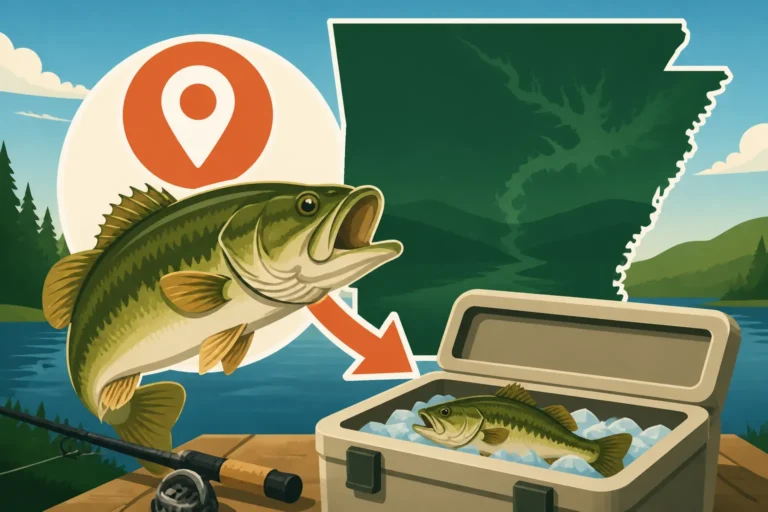
What happens to extra fish once you get home from an Arkansas trip?
It’s a scenario every enthusiastic angler has faced: you’ve had an incredible day out on the water, the cooler is bursting with your prized catch, and as you pull into the driveway, a nagging question creeps into your mind. How many of these beauties am I actually allowed to have once they're off the boat and in my freezer? The rules around possession limits in Arkansas used to be a source of real head-scratching, causing many to worry about inadvertently breaking the law just by having too many fish in their kitchen. This comprehensive guide is here to untangle those complexities, explain recent changes, and give you peace of mind so you can focus on enjoying the bounty of your hard work.
Understanding Arkansas Fishing Possession Limits
For years, the concept of a "possession limit" in Arkansas was something that caused a fair bit of confusion and anxiety among anglers. It wasn't just about what you caught on the day; it was about what you had in your freezer, cooler, or even the back of your truck. Thankfully, recent changes have dramatically simplified this aspect of fishing regulations, making life a whole lot easier for those of us who love to spend time on the water.
The Old Rules: Why Anglers Worried About Home Storage
Back in the day, Arkansas had statewide possession limits for many fish species. What this meant in practice was that the total number of a particular species of fish you could possess at any given time, whether it was still in the livewell, in your cooler, or cleaned and stored in your freezer at home, could not exceed a certain number. This was separate from the daily creel limit, which dictated how many fish you could harvest in a single day.
Imagine this: you'd go out for a fantastic weekend of crappie fishing on Lake Conway, catching your daily limit on Friday, and then another daily limit on Saturday. Under the old rules, if the possession limit for crappie was, say, 40 fish, and the daily limit was 20, you'd be fine after day one. But if you caught another 20 on Saturday, you'd then have 40 fish, hitting your possession limit. If you decided to go out again on Sunday and caught any more crappie, even if you released most of them, you'd be over the possession limit once you added them to your existing stored fish. This often meant anglers felt pressured to process and even consume fish quickly, or worse, cut their trips short to avoid exceeding the limit. It could get complicated, especially for families or groups fishing together over several days.
The Big Change: Elimination of Statewide Possession Limits
Here’s the good news that's really worth celebrating for Arkansas anglers: the Arkansas Game and Fish Commission (AGFC) has eliminated statewide possession limits for the 2026-27 fishing season and beyond. This is a monumental shift that removes a significant burden from anglers' shoulders. What does this mean for you, practically speaking? It means that once you've reached your "final point of storage" for your fish, you no longer have to worry about a cumulative total dictating how many fish you can have in your freezer.
This change acknowledges the reality of modern fishing, where many anglers travel to different lakes or rivers, sometimes staying for several days. Before, you might have worried that the big cooler full of fillets in your truck, combined with what you hoped to catch today, would put you over the limit. Now, that specific worry is largely gone. The focus has entirely shifted to the daily creel limits, which are much more straightforward to manage while you're actively fishing. This change is designed to simplify regulations and encourage more people to enjoy fishing without the added stress of complex cumulative limits. You can read more about the New Possession Limit Rule for Arkansas Anglers and how it impacts your fishing trips.
What "Final Point of Storage" Really Means Now
With the elimination of statewide possession limits, understanding "final point of storage" becomes even more critical, though perhaps less anxiety-inducing. The AGFC defines a fish's final point of storage as any location where the fish are kept and from which they are not intended to be removed for transport to another location, except for consumption, processing, or taxidermy. Essentially, it's where your fish end up for good after you're done transporting them from the water.
Let's break this down with a few scenarios:
- Your Home Freezer: If you bring your catch home, clean it, and put the fillets into your freezer, that freezer is the final point of storage. You can have as many daily limits as you've legally harvested over multiple days stored there without violating a possession limit. You could have 50 pounds of crappie fillets, 30 largemouth bass, and a couple of trophy catfish, all accumulated over various trips. As long as each daily harvest adhered to the creel limits, you're golden.
- A Commercial Processing Facility: If you take your fish to a local processor, like a butcher shop or a dedicated fish cleaning service, that facility acts as the final point of storage until you pick them up.
- A Friend's House: If you catch a daily limit and decide to share some with a buddy who lives down the street, once those fish are delivered to their freezer, that's their final point of storage. You've simply transferred legal possession.
What isn't a final point of storage? Your boat's livewell, the cooler in your truck on the way home from Lake Ouachita, or even a temporary cooler at your campsite. These are all considered points of transit, and while fish are in transit, they must still comply with daily creel limits per angler. This distinction is vital for avoiding trouble with game wardens. The AGFC clarified What counts as a fish's final point of storage in Arkansas? to help anglers understand this key concept. So, if you're loading up a heavy-duty cooler that you found on Amazon for a multi-day trip, remember that its contents are only limited by daily creel until they reach their ultimate destination.
Daily Creel Limits Still Apply: Don't Confuse the Two
While the elimination of statewide possession limits is fantastic news, it's absolutely crucial to remember that daily creel limits are still very much in effect. These are the regulations that govern how many fish of a specific species you can harvest in a 24-hour period (usually from midnight to midnight). This is where the primary responsibility now lies for anglers to stay legal. Many anglers previously confused the two, so understanding the difference is key to a hassle-free fishing experience. To delve deeper into this, check out our guide on Statewide Creel Limits Versus Possession Limits in Arkansas.
How Daily Creel Limits Work on the Water
Daily creel limits are strictly enforced and apply to each individual angler actively engaged in fishing. If you're out on a boat with friends or family, each person with a valid fishing license (or who is exempt) is entitled to their own daily creel limit for each species. However, you can't pool your limits to keep more fish than any one person is allowed. For example, if the largemouth bass daily limit is 5 fish, and you and a friend are fishing, you can collectively keep 10 bass, but you can't say, "I've caught 7, and my friend has only caught 3, so we're good." Each person must adhere to their individual limit.
These limits are designed to manage fish populations, prevent overfishing, and ensure sustainable angling opportunities for everyone. They are species-specific and can also vary by specific water bodies or regions within Arkansas. It's always a good idea to consult the most current AGFC fishing guide before heading out, especially if you're exploring new waters. The good news is that these daily limits are usually printed in a clear, easy-to-read format, often available as a free pamphlet at sporting goods stores or accessible online through the AGFC website.
Examples of Specific Daily Limits for Popular Species
Arkansas is blessed with incredible fishing for a variety of species, and each has its own set of rules. Let's look at some common examples to illustrate how daily creel limits work. Please note that these limits can change, so always verify with the latest regulations.
- Largemouth Bass: Statewide, the daily limit for largemouth bass is often around 5 fish. However, specific lakes like Lake Monticello might have slot limits or different daily limits to manage their unique fisheries. For instance, at Lake Monticello, you might only be allowed one bass 16 inches or longer, while still adhering to the overall daily limit. This helps protect the larger, breeding fish. You can find detailed information about the Largemouth Bass Daily Limit in Arkansas in our dedicated guide.
- Crappie: Crappie, both black and white, are hugely popular in Arkansas. The statewide daily limit is often 20 fish, with a minimum length of 9 inches. Again, there are exceptions. Lake Monticello and Lake Cargile, for instance, have specific crappie regulations that differ from the statewide rules, potentially reducing the daily limit or introducing specific length restrictions for a portion of your catch. Our guide on Crappie Size and Daily Limit in Arkansas breaks down these nuances.
- Trout: For trout, particularly on the famous tailwaters like the White River and Norfork River, the rules are often much stricter and more complex due to the trophy fishery management. On parts of the Norfork Tailwater, for example, the daily limit for rainbow trout might be as low as 2 fish, with specific slot limits where fish of a certain size must be immediately released. This is why a specific trout permit is often required in addition to your general fishing license. Knowing the Arkansas Trout Permit Rules is essential if you plan to target these cold-water beauties.
It’s crucial to understand these nuances. If you’re fishing for different species, you need to keep track of each individual species’ limit. This is especially true if you're using a cooler or livewell that combines different types of fish. A good quality tackle box, perhaps one you ordered from Amazon, helps keep your lures organized, but good mental organization (or a printed copy of the regs!) is what keeps your catch legal.
| Species | Statewide Daily Creel Limit (Example) | Minimum Length (Example) | Special Conditions/Notes |
|---|---|---|---|
| Largemouth Bass | 5 | 13 inches | Lake-specific limits often apply (e.g., slot limits) |
| Smallmouth Bass | 2 (on moving waters) | 12 inches | Highly restricted in many Ozark streams for conservation |
| Crappie | 20 | 9 inches | Specific lakes (Monticello, Cargile) may have different rules |
| Channel Catfish | 10 | No minimum | |
| Blue Catfish | 10 | No minimum | |
| Rainbow Trout | 5 (general trout waters) | No minimum | Tailwater limits can be 2, with slot limits (e.g., Norfork Tailwater) |
| Brown Trout | 1 (general trout waters) | 16 inches (e.g., Spring River) | Often more restrictive in trophy areas, catch-and-release encouraged |
Note: These are examples. Always consult the most current AGFC Fishing Regulations Guide for precise and up-to-date information, as rules can change annually.
Practical Implications for Anglers
With the new regulations in place, anglers have more freedom and less anxiety about what happens after a successful fishing trip. This shift simplifies planning and allows you to enjoy the fruits of your labor without constantly calculating cumulative fish totals.
Multi-Day Trips and Your Cooler Strategy
One of the biggest benefits of the new rules is for anglers embarking on multi-day fishing adventures. Before, if you planned a long weekend on Bull Shoals Lake or a week-long stay near the White River, you had to be meticulous about how many fish you kept each day and how many were already "in possession" from previous days. Now, as long as you adhere to the daily creel limits each day you fish, what you've accumulated in your cooler or at your cabin doesn't count against a future day's limit.
This means you can fill your cooler with the daily limit on Friday, put those fish on ice or get them cleaned and in a freezer at your cabin, and then go out Saturday and catch another full daily limit. There's no longer a statewide "total number of fish you can have" hanging over your head. This greatly simplifies logistics for family trips or group outings where multiple anglers might be contributing to the collective cooler. You can confidently bring that large, well-insulated cooler, maybe one you researched heavily on Amazon for its ice retention, and know that as long as each day's harvest is legal, you're in the clear once those fish hit their final point of storage. This is a game-changer for those who enjoy extended stays, as detailed in our article on How the new possession rule affects multi-day fishing trips.
Processing Your Catch: Filleting and Freezing at Home
When you get home, the process of handling your catch also becomes more straightforward. You're no longer constrained by a possession limit dictating how much you can have in your freezer. This means you can take your time processing your fish. Whether you enjoy filleting each fish meticulously, preparing them for smoking, or simply bagging them for the freezer, you can do so at your leisure without worrying about exceeding a total count.
Properly processing your catch is crucial for enjoying its flavor and ensuring it lasts. A good fillet knife (there are plenty of highly-rated options on Amazon) and a clean workspace are essential. Once cleaned, fish should be rinsed, dried, and then sealed in freezer-safe bags or vacuum-sealed. Labeling your packages with the date and species is a smart habit that helps you keep track of your stock. While the AGFC eliminated statewide possession limits, specific rules regarding the transportation of fish (e.g., retaining a patch of skin on fillets for identification in transit if length limits apply) may still be in effect, so always double-check the current Arkansas Fishing Regulations Guide.
Sharing Your Catch: Gifting Fish Legally
Part of the joy of fishing is sharing the bounty with friends and family. With the new rules, this process is also simplified. Since you're no longer restricted by a total possession limit at home, you can freely share any legally harvested fish you have accumulated. If you've had a fantastic week of catching your daily limits for crappie, and you have 100 crappie fillets in your freezer, you are perfectly within your rights to give a portion of those to your neighbor.
When gifting fish, it's a good practice to ensure the fish are properly cleaned and packaged. While the recipient doesn't need to worry about possession limits on their end (as long as they didn't catch them themselves in violation of limits), it's courteous to provide them with a high-quality product. This change empowers anglers to be more generous with their catch, fostering community and reducing potential waste that might have occurred if anglers felt they couldn't keep enough to share without hitting a restrictive limit. It takes away the previous confusion where giving fish away might have been seen as "reducing your possession" to make room for more, which was a loophole many hoped to navigate. Now, the intent is simply to manage daily harvest, and what happens at home is your pleasure.
Disclaimer
Please remember that fishing regulations are subject to change. While this guide provides an overview of the current rules regarding possession limits in Arkansas as of the 2026-27 season, it is always your responsibility to consult the latest official Arkansas Game and Fish Commission (AGFC) regulations before you head out on the water. This information is for general guidance only and should not be considered legal advice.