Fishing license reciprocity with Texas and Missouri neighbors
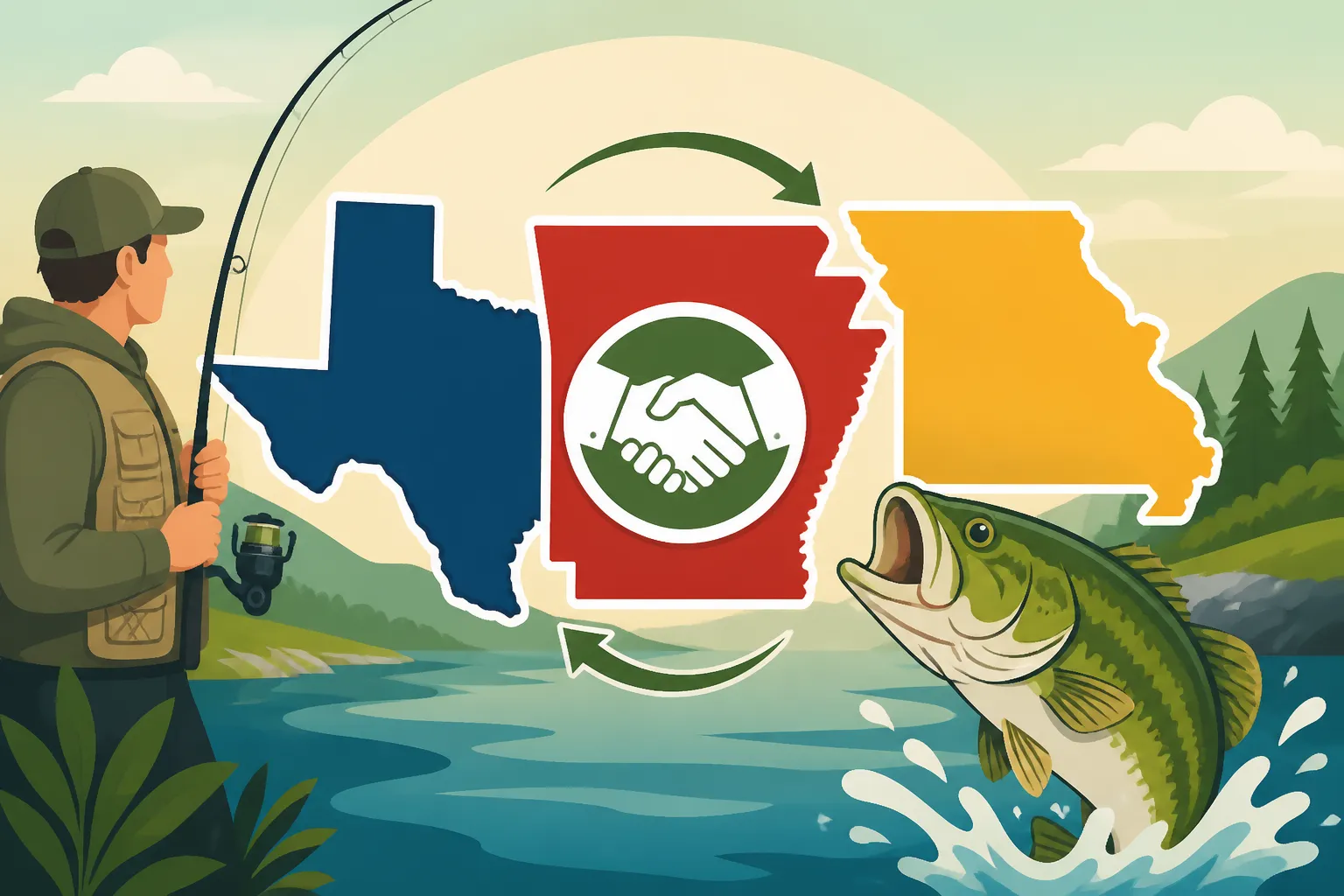
It's incredibly frustrating when you're planning a fishing trip, especially if you live near a state border, and you're left scratching your head, wondering if your home state's fishing license will actually cover you. The confusion around fishing license reciprocity between Arkansas and its neighbors like Texas and Missouri is a common headache for many anglers. This comprehensive guide is designed to clear up all that uncertainty, explaining exactly where your license is valid, where it isn't, and what you need to do to stay legal and enjoy your time on the water.
Understanding Fishing License Reciprocity in Arkansas
The concept of fishing license reciprocity often sounds simpler than it is in practice. You might think, "I have a license in Texas, and Arkansas is right next door, so it should count, right?" Unfortunately, that's rarely the case for all waters. It’s a common misconception that if you live close to a state line, your home state’s license will just magically cover you everywhere. Reciprocity agreements are special, often limited arrangements between states, primarily designed to make it easier for residents on shared border waters, not statewide.
What Reciprocity Truly Means for Anglers
At its core, reciprocity means that two states have agreed to mutually recognize each other's fishing licenses under specific, predefined conditions. These conditions are almost always limited to waters that physically form a common border between the states. For example, a river that runs directly between Arkansas and Missouri might have a reciprocity agreement for a specific stretch. This agreement usually dictates that an angler holding a valid license from either state can legally fish in those specific reciprocal waters. It's an effort to avoid forcing anglers to buy two separate licenses just to fish a single body of water that happens to be split by an invisible state line.
However, it's absolutely crucial to understand that these agreements rarely extend beyond those designated border waters. If you leave that shared river and go fish a lake or a tributary that lies entirely within Arkansas, your Missouri or Texas license will almost certainly not be valid. You'll need an Arkansas license for those waters. These agreements are painstakingly negotiated and often involve complex rules about species, limits, and even methods, which is why they are so specific.
The Importance of Knowing State-Specific Rules
Navigating state lines means navigating different sets of rules, and Arkansas is no exception. Even if you're fishing a reciprocal water, you still need to be aware of the daily limits, size restrictions, and specific gear requirements that might differ from what you're used to in your home state. The Arkansas Game and Fish Commission (AGFC) sets these regulations, and ignorance is rarely an excuse when a game warden checks your license and your creel. Relying on outdated information or assumptions can quickly turn a relaxing day of fishing into a costly one.
For instance, while a border river might honor your out-of-state license, it won't necessarily make you exempt from Arkansas's specific trout permit rules if you decide to target trout in designated waters. Do you need a trout permit to keep trout in Arkansas? Yes, and that's usually an additional requirement, even if your base license is recognized. The potential financial hit for not having the correct license can be significant, ranging from hefty fines to even the confiscation of your gear. Make sure to check the Arkansas Fishing Regulations Guide every time you plan a trip to ensure you're compliant. This diligence helps prevent those unpleasant surprises that can ruin an otherwise perfect fishing day.
Reciprocity Between Arkansas and Missouri
Arkansas shares a significant border with Missouri, especially in the northern reaches of the Ozarks, where rivers and streams frequently meander across state lines. This shared geography often leads anglers to wonder if their Missouri fishing license will hold up when they venture into Arkansas waters. While there are some specific agreements, it's not a blanket acceptance across all waters.
Fishing Designated Border Waters
The primary area of reciprocity between Arkansas and Missouri typically involves specific segments of the St. Francis River. For anglers familiar with this beautiful waterway, the good news is that there's an agreement in place. Generally, a valid, current fishing license from either Missouri or Arkansas is recognized for fishing in the main channel of the St. Francis River where it forms the boundary between the two states. This agreement usually covers the main stem of the river, making it convenient for residents on both sides to enjoy a shared resource without needing two separate licenses.
However, and this is a critical "however," this reciprocity does not extend to the tributaries or side channels that are entirely within one state or the other. For example, if you float the St. Francis River and decide to venture up a small creek that feeds into it, and that creek is fully within Arkansas, you would then need an Arkansas fishing license. Similarly, any lakes or reservoirs that are not the main stem of the St. Francis River and are entirely within Arkansas will require an Arkansas license. It’s always best to consult the Arkansas Game and Fish Commission's official regulations or contact them directly if you plan to fish any specific border water, just to be absolutely certain you're within the reciprocal boundaries.
General Rule for Missouri Anglers in Arkansas
Outside of those very specific, designated border waters like the St. Francis River, a Missouri fishing license holds no legal weight in Arkansas. If you're a resident of Missouri and you plan to fish in any of Arkansas's countless lakes, rivers, or streams that are entirely within the state's boundaries – whether that's the White River, Lake Ouachita, or a small pond in the Delta – you will need to purchase an Arkansas fishing license. It's a bit of a bummer, especially if you're just driving a short distance, but that's just how the cookie crumbles when you cross those invisible lines.
For Missouri residents planning a trip to Arkansas, you have a couple of options for getting licensed. You can purchase a Nonresident Annual Fishing License Cost in Arkansas, which is valid for a full year from the date of purchase. If your trip is shorter, perhaps just a long weekend, you might find the Arkansas Nonresident 3-Day Trip License to be a more cost-effective choice. It's designed specifically for visitors like yourself who want to enjoy a few days of fishing without committing to a full annual license. Just remember to secure your license before you cast your first line to avoid any unnecessary legal issues.
Reciprocity Between Arkansas and Texas
For anglers living near the Texas-Arkansas border, particularly in the southwest corner of Arkansas, the question of license reciprocity naturally arises. While both states boast fantastic fishing opportunities, the reality of cross-state license recognition can be a bit more straightforward than with Missouri, mainly due to the nature of their shared waterways.
Red River and Other Border Waters
The primary waterway that forms a significant portion of the border between Arkansas and Texas is the Red River. Similar to the St. Francis River agreement with Missouri, the Red River often has some level of reciprocity, but it's essential to understand the specifics. Anglers with a valid fishing license from either Arkansas or Texas can typically fish the flowing waters of the Red River where it forms the boundary between the two states. This arrangement allows residents of both states to utilize this shared natural resource without the burden of purchasing two separate state licenses.
However, the "where it forms the boundary" part is key. This reciprocity generally applies only to the main channel of the river itself. It does not extend to any waters that are entirely within the territorial boundaries of one state or the other. For example, if you fish a oxbow lake, a backwater slough, or a tributary that feeds into the Red River but is fully within Arkansas, you would need an Arkansas fishing license. The same applies if you cross into Texas waters that are no longer part of the main border channel. Always double-check the latest regulations from both the Arkansas Game and Fish Commission and the Texas Parks and Wildlife Department to confirm the exact reciprocal zones and any specific rules that might apply to those waters. Assuming blanket coverage could lead to unexpected citations.
General Rule for Texas Anglers in Arkansas
Beyond the very specific, shared waters of the Red River boundary, a Texas fishing license provides no legal authority to fish in Arkansas. This means that if you're a Texas resident planning a fishing excursion to popular Arkansas destinations like Lake Ouachita, Lake Maumelle, or the Little Missouri River, your Texas license will simply not be valid. You will be required to obtain an Arkansas fishing license to legally fish anywhere entirely within the state's borders.
Many anglers from Texas make regular trips to Arkansas, drawn by its diverse fisheries and stunning landscapes. To legally participate in Arkansas Fishing, Texas residents must purchase an Arkansas nonresident license. You have the option of a full annual license or a short-term license, depending on the duration of your trip. The Arkansas Fishing License Requirements for Out-of-State Anglers provides a detailed overview of what's needed. For shorter visits, many find that the 3-day trip license is often the most sensible choice, as highlighted in our guide on 3-day license versus annual license: which saves more money. No matter how close you live to the border, if you're casting a line into waters fully within Arkansas, an Arkansas license is a must-have.
Obtaining an Arkansas Fishing License
So, you've determined that you need an Arkansas fishing license. Don't worry, getting one is usually a straightforward process, designed to be as convenient as possible for both residents and nonresidents. The Arkansas Game and Fish Commission (AGFC) has streamlined the purchasing process to ensure you can get out on the water quickly and legally.
How to Purchase Your License
The easiest and most common way to purchase an Arkansas fishing license these days is online. The AGFC website offers a user-friendly portal where you can buy your license in just a few minutes from the comfort of your home, or even right at the boat ramp if you have a signal. You'll typically need to provide some basic identification information, such as your name, address, and date of birth. Once purchased, you'll receive a digital copy, which you can keep on your phone, or you can print a physical copy. This convenience means no more scrambling to find a store just before your trip. For more specific details on the online process, check out our guide on How to Buy an Arkansas Fishing License Online.
Alternatively, if you prefer a more traditional route, you can still purchase an Arkansas fishing license in person. Many licensed vendors across the state, including most Walmart stores, sporting goods shops like Academy Sports + Outdoors, and various bait and tackle shops, are authorized to issue AGFC licenses. This option is great if you have questions, need local advice, or just prefer a paper copy right away. These vendors are usually well-versed in the different license types and can help ensure you get exactly what you need for your planned trip. Just remember to bring a valid form of identification with you when purchasing in person.
Planning Ahead for Your Trip
Once you have your license, it’s still wise to do a little pre-trip planning. Regulations can change, and what was true last year might be different this season. Always consult the latest Arkansas Fishing License Rules and Costs and the current AGFC Fishing Guidebook before heading out. This guidebook is available online and often in print at license vendors, and it's your go-to source for all rules, including daily limits, size restrictions, and specific regulations for particular bodies of water.
Remember that while your fishing license covers the general act of fishing, certain species or specific waters might require additional permits. For example, if you plan to target trout in any of Arkansas's designated trout waters, you'll almost certainly need to purchase an Arkansas Trout Permit. This is a separate endorsement from your base fishing license. Do you need a trout permit to keep trout in Arkansas? Yes, absolutely. It's a small additional cost but a vital one for staying legal on the state's famous cold-water fisheries. Having your license and any necessary permits readily accessible, whether on your phone or a physical copy, will make any encounter with a game warden smooth and stress-free.
Fishing License Reciprocity at a Glance
To simplify things, here’s a quick overview of fishing license reciprocity between Arkansas and its key neighbors:
| Neighboring State | General Reciprocity | Specific Reciprocal Waters | Additional Notes |
|---|---|---|---|
| Missouri | No | St. Francis River (main channel at border) | License from either state valid in designated border segment. Not valid for tributaries or waters fully within one state. |
| Texas | No | Red River (main channel at border) | License from either state valid in designated border segment. Not valid for oxbows or waters fully within one state. |
| Oklahoma | No | No general reciprocity agreements. Full Arkansas license required. | |
| Louisiana | No | No general reciprocity agreements. Full Arkansas license required. | |
| Mississippi | No | No general reciprocity agreements. Full Arkansas license required. | |
| Tennessee | No | No general reciprocity agreements. Full Arkansas license required. |
Disclaimer
The information provided in this guide is for general informational purposes only and is subject to change. Fishing regulations, license requirements, and reciprocity agreements can be updated by state agencies at any time. Always consult the official websites of the Arkansas Game and Fish Commission (AGFC), the Missouri Department of Conservation, and the Texas Parks and Wildlife Department for the most current and accurate information before planning your fishing trip. Failure to comply with current regulations can result in fines or penalties.