Statewide Creel Limits Versus Possession Limits in Arkansas
It can be incredibly confusing to keep track of all the rules when you're just trying to enjoy a peaceful day on the water. For years, anglers in Arkansas grappled with the dual concepts of daily creel limits and statewide possession limits, often leading to anxiety about whether their cooler full of fish from a multi-day trip was legal. Thankfully, recent changes for the 2026-27 fishing season have simplified things considerably, especially regarding how much fish you can have at home. This guide will meticulously break down the differences, explain the new rules, and help you navigate Arkansas's fishing regulations with confidence.
Understanding the Basics of Daily Creel Limits in Arkansas
Daily creel limits are the bedrock of fisheries management, a concept every angler needs to grasp. These limits are the primary tool the Arkansas Game and Fish Commission (AGFC) uses to manage fish populations on a day-to-day, or rather, a catch-by-catch basis.
Defining Daily Creel Limits
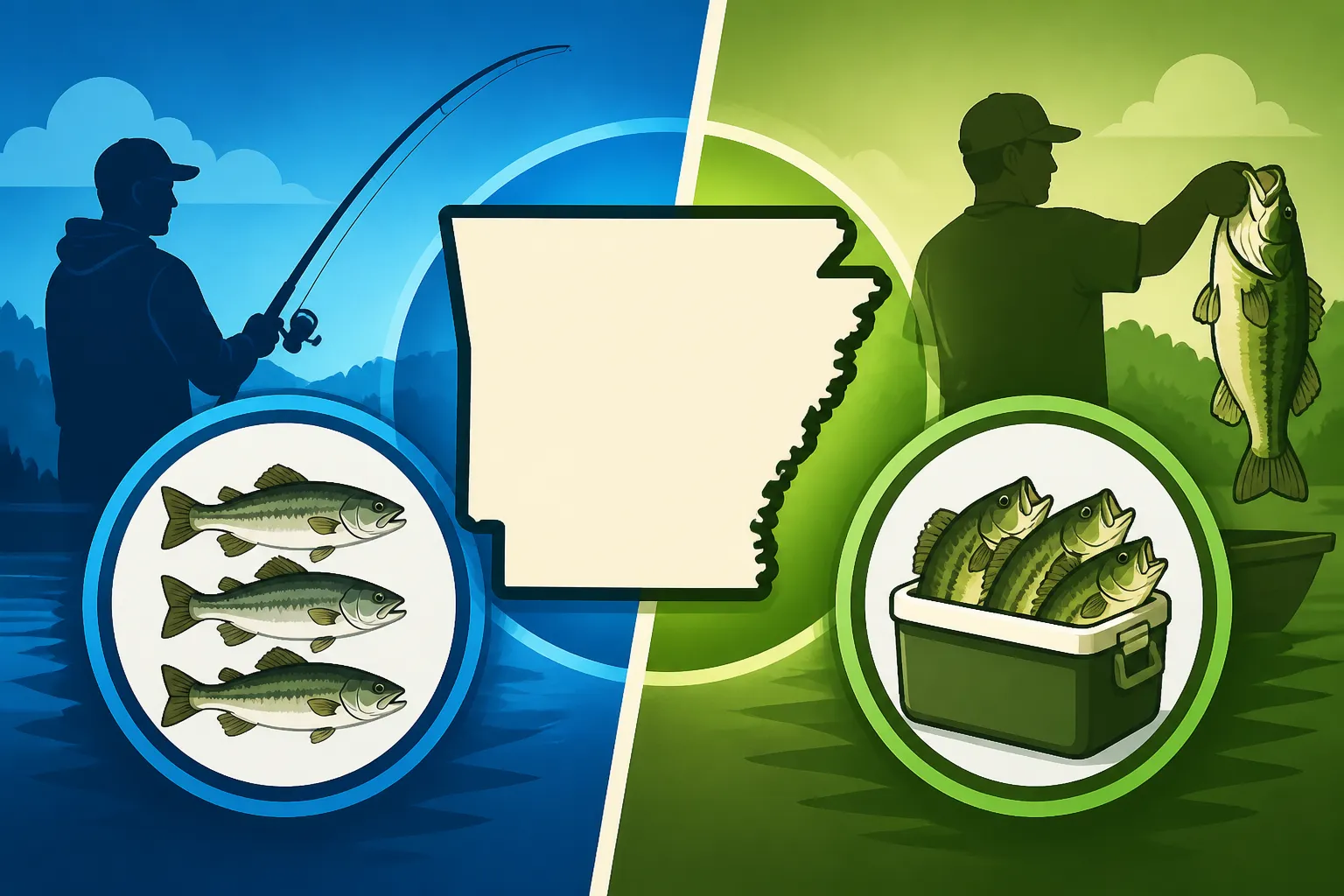
A daily creel limit is the maximum number of a specific species of fish you are legally allowed to harvest and retain within a single 24-hour period, typically measured from midnight to midnight. This isn't about how many fish you might have stored away in your freezer at home; it's strictly about what you can take out of the water and keep during that particular fishing trip.
Let's imagine you're out on the water, perhaps at Lake Conway, and you're targeting largemouth bass. The statewide largemouth bass daily limit is 5 fish. This means that, from the moment you cast your first line until the clock strikes midnight, you can only put five legal-sized largemouth bass in your livewell or cooler. Once you've successfully caught and kept those five fish, any additional largemouth bass you might reel in must be immediately released, regardless of how tempting it might be to keep them. This rule ensures that the harvest is distributed among many anglers and prevents a single individual from over-harvesting a particular fish stock in a short timeframe.
These daily limits are frequently coupled with size restrictions. So, it's not just about the number; it's also about the length. For instance, you might have a daily limit of 20 crappie, but each one must be 9 inches or longer to be legal to keep. If you catch a crappie that measures a frustrating 8.5 inches, it doesn't count towards your 20-fish limit, and more importantly, it must be released. This combination of quantity and quality control is a sophisticated approach by the AGFC to foster healthy and robust fish populations for everyone to enjoy.
Why Creel Limits Exist and Their Impact
The fundamental reason behind daily creel limits is conservation and sustainable resource management. Fish populations, even in abundant waters, are not infinite. Without these limits, unchecked harvesting could quickly deplete local stocks, leading to fewer fish, smaller average sizes, and a diminished quality of fishing for everyone down the line. By setting a cap on what each angler can take daily, the AGFC helps ensure that enough fish remain in the ecosystem to reproduce and grow, guaranteeing future generations of anglers have plenty of opportunities. It’s a collective effort to share and protect a valuable natural resource.
Beyond pure conservation, creel limits are also instrumental in shaping the quality of a fishery. In certain areas, you'll encounter nuanced regulations like "slot limits." These limits might permit anglers to keep fish below a certain size and above another, while requiring the release of fish within a specific "slot" in between. This strategy is often employed to protect prime spawning-size fish, allowing them to reproduce and contribute to the population, or to promote the growth of fish into larger size classes. For example, some trophy trout sections of the White River might enforce a daily limit of one fish over a particular length, combined with a smaller overall daily limit, specifically to encourage the development of larger, more mature trout. These intricate rules are meticulously developed by fisheries biologists based on scientific data. For a comprehensive overview, you can explore the Arkansas Fish Size and Daily Limits guide.
Consider the potential ramifications without these daily limits: a handful of highly skilled or consistently lucky anglers could rapidly remove a substantial portion of a lake's or river's fish population, particularly during peak biting periods. This would swiftly lead to a drastic reduction in fish numbers, a decrease in average fish size, and a significantly less rewarding fishing experience for everyone else. Creel limits are designed to spread the angling pressure, providing the fish with a fighting chance and sustaining a healthier, more enjoyable environment for all of us who cherish casting a line in Arkansas. It’s a delicate balance between allowing recreational enjoyment and safeguarding the very resource that makes it all possible.
Deciphering Possession Limits: The Old Way
For many years, the concept of a "possession limit" added another layer of complexity to Arkansas fishing regulations, often leading to confusion and frustration for anglers. This rule, though well-intentioned, frequently complicated multi-day trips and home storage.
Defining Possession Limits Historically
Historically, a possession limit dictated the absolute maximum number of fish of a particular species an angler could have in their possession at any given time, irrespective of when those fish were caught. In Arkansas, this limit was typically set at twice the daily creel limit for most species. So, if the daily limit for, say, striped bass was 3 fish, your possession limit would be 6. This wasn't just about the fish in your boat or cooler; it encompassed any fish you had stored at your cabin, in your vehicle, or even in your home freezer.
This system presented a significant challenge, especially for anglers enjoying extended fishing trips. Imagine a scenario where you're staying at a rental near Lake Norfork, known for its trophy striped bass. On Friday, you have an incredible day and catch your daily limit of 3 stripers. You return to your cabin, clean them, and meticulously freeze them. On Saturday, you head out again and, by noon, you've landed another 3 stripers, hitting your daily limit once more. At this point, you have 3 fresh fish in your cooler and 3 frozen fish at the cabin. With a possession limit of 6, you've officially reached your maximum. If you wanted to fish again on Sunday, you wouldn't be able to keep any more striped bass without exceeding the legal possession limit, even if you hadn't caught any fish that day. It forced a constant, tedious calculation, and often meant releasing perfectly legal fish or curtailing your trip prematurely.
The old possession limit rules essentially turned what should be a relaxing fishing vacation into a logistical puzzle. You had to account for every fish harvested, not just today, but also yesterday and the day before, comparing that cumulative total against the possession limit. Many of us can relate to the anxiety of peering into a freezer, trying to recall precisely how many bags of crappie fillets were in there, just to ensure compliance. This system, while designed to prevent commercial-scale harvesting by recreational anglers, frequently ensnared and frustrated genuine enthusiasts.
The Frustration of Old Possession Rules
The primary source of discontent with the historical possession limits stemmed from their restrictive nature and the sheer complexity they imposed on recreational anglers. Imagine you've planned a well-deserved, week-long fishing retreat to the Ozark Mountains, perhaps basing yourself out of a quaint cabin near Bull Shoals Lake. Your goal is to unwind, enjoy the stunning natural beauty, and bring home a good haul of delicious crappie or bass. On your first day, you achieve your daily limit of 20 crappie. On day two, you repeat this success, adding another 20 to your cooler. Under the old rules, with a typical possession limit of twice the daily limit (40 crappie), by the end of day two, you were effectively done keeping crappie for the rest of your trip. Even if the fish were biting ferociously on day three, you would be legally required to release every single one, which could be incredibly disheartening when you had planned to stock your freezer.
This wasn't merely an inconvenience; it had the potential to genuinely detract from the overall fishing experience. Many families and individual anglers rely on their catch not just for immediate meals during their trip but also to freeze and enjoy later at home. The old possession limit acted as a tangible barrier to this, forcing anglers into difficult choices: Do you cut your well-deserved vacation short to drive home and offload your catch? Do you reluctantly release perfectly legal fish that you would prefer to keep? Or do you pivot to targeting an entirely different species, even if it wasn't what you initially wanted to fish for? These kinds of decisions took away from the simple, unadulterated pleasure of fishing.
Furthermore, these regulations posed significant enforcement challenges for game wardens. It was notoriously difficult to definitively prove when and where fish had been caught, especially when an angler had a freezer full of processed fillets. This inherent ambiguity could lead to misunderstandings and undue stress for anglers who were honestly attempting to adhere to the rules. Conversations on online fishing forums and around campfires frequently revolved around deciphering these confusing guidelines, with a widespread desire for a simpler, more transparent approach. The old system, while perhaps rooted in good intentions, often created more headaches than it solved for the average, law-abiding angler.
The Big Shift: Arkansas's 2026-27 Regulations and Possession Limits
Get ready for some truly exciting news that will make your Arkansas fishing trips far more enjoyable and less stressful! The Arkansas Game and Fish Commission (AGFC) has listened to anglers and implemented a significant change for the 2026-27 fishing season.
Elimination of Statewide Possession Limits for 2026-27
For the 2026-27 fishing season and moving forward, the AGFC has made a monumental decision: they have eliminated statewide possession limits for most species. This means that the old rule, where you were generally restricted to possessing no more than twice your daily limit, even in your home freezer, is largely a thing of the past. This crucial update simplifies regulations, removes a major headache for recreational fishermen across the Natural State, and truly enhances the angling experience. You can delve into more specifics about this pivotal change in the New Possession Limit Rule for Arkansas Anglers guide.
This transformative shift means that as long as you meticulously adhere to the daily creel limit for any given day you are actively fishing, the fish you legally harvest and transport home are no longer subject to a cumulative statewide possession count once they reach their "final point of storage." To illustrate, if you have a phenomenal fishing day on Monday, reeling in your daily limit of 5 largemouth bass, then repeat that success on Tuesday with another 5, and again on Wednesday with a final 5, you can now legally store all 15 of those bass at your home without fearing a violation of a cumulative possession limit. This provides immense relief, particularly for those dedicated anglers who love to stock their freezers after a series of successful, multi-day fishing excursions.
It's paramount to emphasize that this change primarily applies to statewide possession limits. It's always possible that specific water bodies or unique, highly specialized regulations might still retain their own possession limits, especially for certain sensitive species or in designated conservation zones. Therefore, it is always a wise practice to meticulously review the latest AGFC fishing regulations guide for any localized exceptions that might apply to your chosen fishing destination. However, for the vast majority of Arkansas's diverse lakes and rivers, the era of anxiously counting fillets in your freezer to avoid legal trouble has drawn to a close. This thoughtful move by the AGFC undeniably reflects a genuine commitment to making fishing a more straightforward, enjoyable, and ultimately less anxiety-inducing pastime for the average angler.
What "Final Point of Storage" Means Now
With the groundbreaking elimination of statewide possession limits, the concept of "final point of storage" has evolved to become both more critical and, paradoxically, much simpler for anglers to understand and apply. Historically, this term referred to the location where your legally harvested fish were stored after your fishing trip, such as your home freezer, and it was the point at which your cumulative possession limit came into play. Now, under the progressive 2026-27 regulations, the "final point of storage" still designates where your fish ultimately end up, but the crucial difference is that the statewide numerical total you can have there is no longer capped by a cumulative possession limit. In essence, it means that once your fish are safely off the water and in their long-term storage, they are considered distinct from any new daily creel limits you might incur on subsequent fishing trips.
Let's clarify this with a practical scenario: your daily creel limit is the only numerical restriction that applies while you are actively engaged in fishing or in the process of transporting your freshly caught fish from the water. Once those fish have been properly cleaned, processed into fillets, and securely placed into your freezer at your primary residence, your cabin, or another similar long-term storage facility, they are effectively "out of play" and will not be counted against any new daily creel limit you adhere to on a future, separate fishing expedition. The AGFC specifically clarified this change by stating that "anglers no longer need to count fish at home in Arkansas," which dramatically reduces the mental gymnastics and constant worry that previously accompanied planning consecutive fishing outings. This updated approach wisely recognizes that recreational anglers are not commercial enterprises and should not be burdened by a cumulative total once their legally harvested fish have left the immediate fishing environment and are destined for the dinner table.
The vital takeaway here is crystal clear: the daily limit is the paramount rule that applies on the water and during the immediate transport of your catch. Once those fish have reached their designated final point of storage, your freezer can legitimately hold as many legally harvested fish as you have accumulated over various, distinct fishing days, with each day's catch having fully respected its individual daily creel limit. This is a monumental change for countless anglers, affording them greater flexibility in planning their trips and significantly reducing concerns about inadvertently violating a rule that many found opaque and unnecessarily complicated. For a deeper dive into the nuances of this concept, you might find the article What Counts as a Final Point of Storage for Fish in Arkansas particularly insightful.
Why This Change Was Made
The decision by the Arkansas Game and Fish Commission to eliminate statewide possession limits was not made in a vacuum; it was a thoughtful and direct response to years of consistent angler feedback and a keen recognition of the evolving landscape of recreational fishing. The previous rules, while perhaps initially conceived with good intentions to deter commercial over-harvesting, frequently resulted in unnecessary complexity and considerable frustration for honest, law-abiding individuals and families whose sole desire was to enjoy their fishing and bring home their hard-earned catch. The AGFC demonstrably heard and acknowledged these persistent concerns from the angling community.
One of the primary driving forces behind this significant change was the compelling need to simplify fishing regulations. While fisheries management inherently involves a degree of complexity, the AGFC understood that overly bureaucratic or confusing hurdles only serve to deter participation and enjoyment. By judiciously removing the statewide possession limit, the AGFC has made it substantially easier for anglers to both comprehend and comply with the rules, which, in turn, cultivates a more positive and cooperative relationship between the state's fishing community and its regulatory body. When regulations are clear, intuitive, and easy to follow, individuals are far more inclined to adhere to them without the constant anxiety of making a mistake.
Moreover, this progressive change thoughtfully acknowledges the profound economic and social benefits derived from multi-day fishing trips. Tourists flocking to Arkansas's premier fishing destinations, such as the world-renowned White River or the expansive Lake Norfork, for a week-long vacation can now revel in consecutive days of productive fishing without the added burden of worrying about maxing out their freezer space at a rented cabin or feeling compelled to cut their trip short to return home. This not only significantly enhances the visitor experience but also provides a substantial boost to local economies through increased expenditures on lodging, dining, and the purchase of fishing gear. Imagine investing in a high-quality fishing rod or a durable tackle storage system, perhaps even sourced conveniently from Amazon, for your trip, only to be limited by how many fish you could actually catch and keep. This new, more flexible rule genuinely opens up more opportunities for extended stays and a much greater, unencumbered enjoyment of Arkansas's truly incredible fisheries. Fundamentally, this change is all about making fishing more accessible, more enjoyable, and fostering greater participation, all while continuing to trust anglers to responsibly adhere to daily limits.
Practical Implications for Anglers: Planning Your Fishing Trip
The elimination of statewide possession limits for the 2026-27 season marks a monumental shift, fundamentally altering how anglers can plan and execute their fishing adventures in Arkansas. This change offers unprecedented flexibility and significantly reduces the stress associated with multi-day trips and home storage.
Impact on Multi-Day Trips
Without a doubt, this change in possession limits provides the most tangible benefits for anglers who savor extended fishing excursions. In the past, if you planned a three-day trip to a consistently productive spot like Beaver Lake, renowned for its excellent crappie fishing, you would have been under constant pressure to meticulously monitor your total kept fish. On day one, you might have easily reached your daily limit of 20 crappie. On day two, you could have repeated that success, adding another 20 to your cooler. However, because the old statewide possession limit was typically set at twice the daily limit (meaning 40 crappie in this specific scenario), by the end of day two, you would have effectively exhausted your legal capacity to keep any more crappie for the duration of your trip. Even if the crappie were biting voraciously on day three, you would have been legally obligated to release every single one, which could be a truly disappointing outcome if your primary goal was to stock your freezer.
Now, with the statewide possession limit a thing of the past, you are liberated to fish for multiple consecutive days, successfully catch your daily limit each day, and bring home all those legally harvested fish without any fear of exceeding a cumulative, overarching total. For example, if you decide to spend a fantastic long weekend at Lake Ouachita, a body of water celebrated for its abundant bass and crappie populations, you can now fully immerse yourself in three productive days of fishing. If you manage to achieve your daily limit of 5 largemouth bass on each of those three days, you can now legally and confidently take home a total of 15 bass. This removes a colossal source of anxiety and allows anglers to genuinely maximize their precious time on the water, returning home with a well-deserved and substantial bounty from their skillful efforts. This crucial update undeniably streamlines the process of planning a fishing vacation, enabling you to focus wholeheartedly on the thrilling act of fishing itself rather than being preoccupied with complex and often confusing rule adherence. The nuances of how the new possession rule affects multi-day fishing trips are now much simpler to understand and implement.
This newfound freedom also directly impacts how you prepare for your fishing adventures. You might now thoughtfully consider bringing a significantly larger cooler, or even investing in a portable freezer unit, if you realistically anticipate several days of exceptional fishing success. You are no longer constrained to cutting your trip short or prematurely ceasing your fishing activities simply because your home freezer is nearing its old, restrictive capacity. This change genuinely expands the realm of possibilities for longer, more productive, and ultimately more deeply satisfying fishing adventures across the breathtaking landscapes of the Natural State.
Home Storage and Your Catch
The revised regulations have drastically simplified the process of home storage for your legally caught fish. In previous years, every single fish fillet, every meticulously wrapped whole frozen fish nestled in your home freezer, painstakingly counted towards your statewide possession limit. This meant that if you had an incredibly successful spring crappie season, filling your freezer, and then later wished to pursue bass fishing in the summer, you still had to be acutely aware of those crappie fillets taking up valuable "possession" space. This often led to both humorous and, more often, frustrating scenarios where dedicated anglers felt compelled to rapidly consume their catch or generously give it away just to create enough legal space for new fish within the existing, restrictive limits.
Now, once fish are legally harvested, responsibly transported home, and carefully placed into their designated "final point of storage"—be that your trusty kitchen freezer, a robust deep freezer humming away in the garage, or even at a friend's freezer (with proper documentation, of course, to unequivocally prove they were legally obtained)—they are no longer subject to a statewide possession cap. This groundbreaking change means you can accumulate as many legally caught fish as you have harvested over various distinct fishing trips, provided that each individual trip fully respected its daily creel limits. This offers immense flexibility, particularly for families who view fishing as a vital source of wholesome food, or for those who simply cherish the joy of having a well-stocked freezer brimming with their favorite catches.
It is crucial to remember that while the statewide possession limit has been lifted, you must still ensure that your fish remain identifiable by species, especially if they haven't been processed into unrecognizable fillets, particularly during the critical phase of transporting them from the water to your final point of storage. This ongoing requirement assists game wardens in verifying the species and confirming that any minimum size requirements were met. While you might fillet fish on the water, always consult the AGFC regulations for specific guidelines regarding on-water filleting versus processing at your final destination. These seemingly minor habits contribute significantly to ensuring a completely worry-free and legal fishing experience. For those who invest in premium quality vacuum sealers or specialized, heavy-duty freezer bags, readily available from retailers like Amazon, this pivotal change means their efforts can now yield a much larger, legally permissible return.
Staying Compliant: Tips to Avoid Violations
Even with the exciting simplification of statewide possession limits, maintaining compliance with Arkansas's fishing regulations remains paramount. A little bit of proactive effort can save you from a lot of potential hassle and ensure your time on the water is truly enjoyable.
Always Check Local Regulations
Despite the welcome changes to statewide possession limits, the cardinal rule of fishing persists: you must always consult the most current Arkansas Fishing Regulations Guide before embarking on any fishing trip. While the general statewide possession limit has largely been removed, specific water bodies, particular river sections, or specialized tailwaters often operate under unique, often more stringent, regulations that take precedence over the general statewide rules. These localized special regulations are implemented for very precise conservation objectives, which can include safeguarding vulnerable species, meticulously managing trophy fisheries, or adapting to the distinctive ecological conditions of a particular area.
For example, the celebrated trout waters nestled below certain dams, such as the renowned Norfork Tailwater, are governed by highly specific limits on trout species and sizes that differ quite significantly from the general regulations applied throughout other parts of the state. In these unique environments, you might encounter intricate "slot limits" or clearly designated "no-kill zones" that directly impact both your daily creel and what you are legally permitted to retain. Similarly, certain lakes might impose their own special bass or crappie regulations, as exemplified by the Lake Monticello Bass and Crappie Exceptions or the Lake Cargile Crappie Limit Rules, which are meticulously crafted to manage those particular fisheries. Being aware of these crucial exceptions is absolutely vital, as ignorance of the law is, unfortunately, never a valid excuse for non-compliance.
The AGFC diligently publishes a comprehensive regulations guide each year. This indispensable resource is readily available online, at numerous fishing license vendors, frequently at state parks, and often at major retail outlets. Dedicating a few moments to thoroughly review the rules specifically applicable to your intended target species and chosen fishing location can prevent a significant amount of hassle, potential fines, and unwanted stress. It's also a prudent practice to periodically check the AGFC website for any emergency regulations or in-season changes, which are typically posted prominently. Staying thoroughly informed is your most effective defense against inadvertently breaking the rules, ensuring that your fishing experience is consistently smooth, enjoyable, and completely legal. Do not rely solely on what you think you know; make it a habit to verify the current regulations every single time you visit a new fishing spot or at the commencement of each new fishing season.
Record Keeping and Best Practices on the Water
Even in the absence of a statewide possession limit, maintaining meticulous record-keeping while actively on the water remains an exceptionally smart and highly recommended practice, particularly when it comes to adhering to daily creel limits. When you're immersed in the excitement of fishing, it's remarkably easy to inadvertently lose track of the precise number of fish you've caught and kept, especially if you're experiencing an exceptionally productive day or simultaneously targeting multiple species. Imagine a scenario where you're enthusiastically catching and releasing numerous fish, but occasionally electing to keep a select few for a delicious dinner. Without a clear and accurate tally, you could very easily and unintentionally exceed your legal daily limit.
A simple yet highly effective method to prevent such oversights is to carry a small, waterproof notepad and pencil, or to utilize a dedicated fishing app on your smartphone to log each fish you decide to keep. Some highly organized anglers even employ small, handheld clicker counters, similar to those often used in golf, to maintain a precise and accurate tally. The moment a legal fish is placed into your livewell or cooler, immediately mark it down. This straightforward action virtually eliminates any lingering doubt and can effectively prevent an honest mistake from escalating into a regrettable citation. Furthermore, this demonstrable effort at accurate record-keeping showcases good faith if a game warden happens to inspect your catch, proving that you are actively striving to comply with all relevant regulations.
Another critical best practice involves consistently leaving enough of the fish's identifying features intact during its transport from the water to your designated final point of storage. While the convenience of filleting fish on the water is tempting, many regulations stipulate that a portion of the skin must remain firmly attached to the fillet. This seemingly minor detail is crucial as it allows game wardens to accurately identify the species and, if applicable, verify that the fish met any minimum size requirements. Always meticulously consult the AGFC regulations for specific and current requirements regarding the filleting of fish on the water versus processing your catch at your final destination. Adopting these seemingly small but impactful habits will make a profound difference in ensuring a completely worry-free and thoroughly enjoyable fishing experience.
Specific Scenarios and Exceptions to the General Rules
While the recent changes to statewide possession limits have certainly streamlined many aspects of Arkansas fishing, it's vital to recognize that the state's diverse aquatic environments necessitate specific, sometimes more stringent, regulations for particular areas or species. These exceptions are critical for effective fisheries management.
Trout Waters and Special Regulations
Despite the welcomed simplification of general possession limits, it is absolutely paramount to remember that some of Arkansas's most celebrated fishing destinations, particularly its globally renowned trout waters, frequently operate under highly specific and often considerably more restrictive regulations. These iconic areas, such as the esteemed White River tailwaters situated below Bull Shoals Dam or the pristine Norfork River, are managed with intense precision to preserve their world-class trout fisheries, which include a magnificent array of species like rainbow, brown, cutthroat, and brook trout. The rules governing these waters can diverge significantly from the general statewide limits you might encounter elsewhere.
For instance, within specific sections of the White River and Norfork River, you are likely to encounter rigorous daily creel limits that are substantially lower than those for other fish species. These limits can be as few as 2-5 trout per day, often coupled with very precise size restrictions or even complex "slot limits" where trout within a certain size range must be immediately released. Furthermore, some designated areas might be exclusively classified as "catch and release" zones, or they may permit only artificial lures equipped with single barbless hooks. The precise regulations can fluctuate considerably depending on the specific river section or even the exact distance from the dam. Take, for example, the comprehensive Norfork Tailwater Trout Rules in Arkansas; within this guide, you will discover explicit and detailed instructions outlining precisely what you are legally permitted to keep and what must be released.
These specialized and often stricter rules are fundamentally in place because trout populations in tailwaters are typically sustained by carefully managed stocking programs and delicate natural reproduction within very specific, temperature-controlled environments. Over-harvesting or improper handling of these fish can rapidly and severely decimate these sensitive populations, undoing years of conservation efforts. Therefore, it is absolutely essential to always consult the trout-specific sections of the official Arkansas Fishing Regulations Guide if your plans include fishing in these breathtakingly beautiful yet stringently regulated waters. Never assume that the general statewide rules apply, because in these unique and delicate ecosystems, they almost invariably do not.
Lakes with Unique Rules and Youth Anglers
Beyond the famous trout rivers, Arkansas is home to several lakes that boast their own unique regulations, meticulously tailored to achieve specific fisheries management goals. These localized rules are often implemented to enhance fish size, bolster population health, or cultivate the trophy potential for highly sought-after species like bass and crappie. As we’ve discussed, you'll need to pay close attention to the specific rules governing lakes such as Lake Monticello or Lake Cargile, as they might feature different daily limits or size restrictions compared to the broader statewide averages.
For instance, Lake Monticello is widely recognized for its exceptional largemouth bass fishery, but it operates under specific regulations designed to prudently manage that population. These might include a "slot limit" where only fish outside a certain size range can be kept, or a reduced number of larger fish allowed within the daily creel. Lake Cargile, similarly, may impose its own unique crappie rules, perhaps a lower daily limit or an altered size restriction, all precisely calculated to ensure sustainable and high-quality fishing experiences for those particular bodies of water. Understanding these vital, hyper-local details is crucial and can be the difference between a successful, legal trip and an unfortunate violation. These specific regulations are often a result of intensive management strategies aimed at achieving desired outcomes, such as fostering the growth of larger bass or ensuring a robust and healthy crappie population for many years to come.
When it comes to engaging youth anglers, Arkansas maintains a wonderfully welcoming policy! Generally, resident children under the age of 16 are not required to purchase an Arkansas fishing license. This is an absolutely fantastic initiative for introducing and encouraging younger generations to participate in the joys of sport fishing. However, it's important to note that even though they may not need a license, these young anglers are still subject to the same daily creel limits and specific water body regulations that apply to adults. Therefore, if your 10-year-old is fishing alongside you, any fish they legally keep will count towards the boat's or the group's collective daily limit, and they must adhere to all size and species-specific rules relevant to that particular body of water. You can find more comprehensive information on this topic in the Do Kids Need a Fishing License in Arkansas? guide. This approach is all about instilling responsible angling practices from a tender age, thereby cultivating a future generation that deeply respects and diligently protects our invaluable fish populations.
Comparing Old vs. New Possession Limits: A Clearer Picture
To help clarify the significant changes that have come into effect for the 2026-27 fishing season, let's take a side-by-side look at how possession limits historically functioned in Arkansas versus the new, streamlined, and much more angler-friendly approach. This table is designed to make it much easier to grasp the profound impact these updates will have on your upcoming fishing trips.
| Feature | Old Statewide Possession Limit Rules (Pre-2026-27) | New Statewide Possession Limit Rules (2026-27 Onward) |
|---|---|---|
| Definition | The maximum number of fish of a specific species allowed in one's possession at any time, including on their person, in their boat, and at their home/storage location. | The daily creel limit is the only numerical statewide limit. Fish that have reached their "final point of storage" are no longer counted against future daily limits. |
| Typical Limit | Generally, twice the established daily creel limit for a given species. | There is no longer a statewide cumulative numerical possession limit for fish once they are in their final storage location. |
| Multi-Day Trips | Highly restrictive. Anglers could only keep fish up to the possession limit across all days of their trip, often forcing early release or trip curtailment. | Significantly more flexible. Anglers can keep their daily limit each day, accumulating all legally harvested fish over multiple, consecutive trips. |
| Home Storage Impact | All fish stored in a home freezer counted directly against the possession limit, necessitating constant tracking and monitoring. | Fish stored in a home freezer (or other final point of storage) do not count against current or future daily creel limits. |
| Angler Experience | Often led to confusion, considerable frustration, and the premature cessation of keeping fish on multi-day trips. | Dramatically simplifies regulations, significantly reduces angler stress, and actively encourages longer, more successful fishing excursions. |
| Enforcement Focus | Primarily focused on verifying the total number of fish in possession (on person, in boat, and at home). | Primarily focused on enforcing daily creel limits and ensuring proper identification of fish on the water and during transport. |
| Key Restriction | The total cumulative count of fish across all locations. | Only the daily harvest count of fish. |
As you can clearly see from this comparison, the shift in regulations is quite dramatic and overwhelmingly positive for recreational anglers in Arkansas. The focus has successfully transitioned from a cumbersome and often confusing cumulative total to a much simpler and more intuitive system that primarily emphasizes adherence to the daily creel limit each time you go fishing. This fundamental change promises to make your fishing experience in Arkansas far more enjoyable and considerably less burdened by complex numerical calculations. However, it's crucial to always remember that specific water bodies might still retain their own unique and specialized rules, so it is an absolute best practice to consistently consult the official AGFC regulations for your chosen fishing spot before casting your line! This progressive change truly exemplifies an effort to make fishing in Arkansas as accessible, rewarding, and stress-free as possible for everyone.
Navigating Arkansas's Fishing Landscape with Confidence
Exploring the rich and varied fishing landscape of Arkansas is a truly unparalleled experience, offering everything from crystal-clear, cold-water trout streams to expansive, bass-laden reservoirs. To ensure that every trip is successful, enjoyable, and completely free of legal worries, a clear understanding of the state’s regulations is your most powerful tool.
The Importance of the Arkansas Fishing Regulations Guide
Navigating the diverse and abundant waters of Arkansas can be an incredibly enriching and rewarding experience, offering an unparalleled array of fishing opportunities, from the serene, cold-water trout streams to the sprawling, bass-rich lakes. However, the indisputable key to consistently achieving a truly successful and entirely stress-free fishing trip lies in comprehensively understanding and diligently respecting the regulations that are meticulously crafted to govern these precious natural resources. The official Arkansas Fishing Regulations Guide is not merely a helpful suggestion; it stands as your ultimate, comprehensive bible for ensuring you remain completely legal and, crucially, for contributing actively to the long-term sustainability and vibrancy of our cherished fisheries. This indispensable guide is readily accessible in its entirety on the AGFC website, and convenient physical copies can be picked up at virtually any well-stocked bait shop, major sporting goods retailer like Bass Pro Shops, or large retail chain such as Walmart that sells fishing licenses.
This invaluable guide furnishes critical information spanning every aspect of fishing regulations. It covers everything from the general statewide daily creel limits for widely popular species like crappie, bass, and catfish, to highly specific length limits, intricate special regulations pertaining to particular lakes and rivers, and even the nuanced details of how to properly and legally transport your catch. Furthermore, it meticulously outlines all the requirements for various types of fishing licenses, including the different categories available and their associated costs, which is an absolutely essential piece of knowledge to acquire even before you contemplate casting your very first line. For example, a thorough understanding of Arkansas Fishing License Rules and Costs should be considered your foundational first step into the state's fishing world. Even with the recent and welcomed simplification of statewide possession limits, there remain numerous other vital rules concerning fishing seasons, permissible gear, and clearly designated fishing areas that must be rigorously observed and followed without exception.
Taking the deliberate time to thoroughly review the guide, with particular emphasis on the sections directly pertaining to the specific water body you intend to visit and the particular species you plan to target, is of paramount importance. Many experienced and savvy anglers maintain a digital copy of the guide conveniently stored on their smartphone for quick, on-the-water reference, which can be an absolute lifesaver. Adopting this simple habit is an easy and effective way to save yourself from potential fines, avoid embarrassing encounters with game wardens, and prevent the profound disappointment of having to reluctantly release a perfectly good fish simply because you misinterpreted or overlooked a critical rule. Think of it as a small, upfront investment of your time that will ultimately guarantee countless hours of worry-free, enjoyable, and rewarding experiences on Arkansas’s beautiful waters.
Embracing the Spirit of Responsible Angling
The recent, progressive changes to Arkansas's possession limits represent far more than just a tweak in regulations; they symbolize a significant vote of confidence in the recreational angler to act with integrity and responsibility. While these new rules undeniably offer greater flexibility and ease, they simultaneously underscore the profound importance of embracing ethical fishing practices and fostering a deep, unwavering commitment to conservation. Responsible angling, at its core, transcends merely adhering to the precise letter of the law; it encompasses a deeper understanding of the vital spirit and underlying rationale behind these regulations – a shared commitment to safeguarding healthy and thriving fish populations for the enjoyment of today's anglers and for the sustained benefit of all future generations.
This profound commitment to responsible angling means consistently practicing exemplary catch-and-release techniques for any fish you do not intend to keep, thereby minimizing stress, injury, and maximizing their survival chances. It necessitates the diligent and proper disposal of all trash, discarded fishing line, and any other litter, ensuring that we leave our precious waterways in an even cleaner and more pristine state than we found them. Furthermore, it actively involves continuously educating ourselves and, crucially, others about the current regulations and, more importantly, the fundamental ecological reasons that underpin them. For instance, if you happen to hook a smallmouth bass in one of Arkansas's moving water bodies, a thorough understanding of the specific Smallmouth Bass Rules on Arkansas's Moving Waters Statewide is not just about compliance, but also about actively contributing to the vital protection and robust management of that particular fish population.
For those who are just embarking on their fishing journey, or even for seasoned anglers seeking to refine their techniques and knowledge, a wealth of resources is readily available, ranging from local fishing clubs that offer invaluable community support to comprehensive online tutorials that provide expert guidance. While investing in high-quality fishing gear, perhaps some durable waders or a cutting-edge new fishing reel from Amazon, is certainly beneficial, investing in your personal knowledge of fishing regulations and firmly-rooted conservation principles is, without question, even more critical for long-term success and sustainability. Ultimately, the AGFC's forward-thinking decision to simplify possession limits empowers all of us to enjoy our beloved sport more fully and with greater freedom. However, this empowerment also places an even greater, shared emphasis on our individual responsibility to diligently protect, conscientiously manage, and proudly preserve Arkansas's truly incredible and unique fishing heritage. Let us all enthusiastically do our part to keep our state's waters abundant, teeming with life, and our cherished fishing traditions vibrant and strong for countless years to come.
Disclaimer
The information provided in this guide is intended for general informational purposes only and does not constitute legal advice. Fishing regulations in Arkansas are subject to change by the Arkansas Game and Fish Commission (AGFC). While we strive to provide accurate and up-to-date information, it is the sole responsibility of the angler to consult the official, current Arkansas Fishing Regulations Guide prior to any fishing activity to ensure full compliance with all applicable laws and regulations.