Do Rainbow and Brown Trout Share the Same Arkansas Waters?
It's a question many new trout anglers, and even some seasoned ones, ponder when planning a trip to Arkansas's famed cold-water fisheries: "If I'm heading to a river known for trout, will I find both rainbow and brown trout there, or do they each stick to their own kind of water?" It's a valid concern, because knowing what fish species to expect helps you prepare with the right gear and techniques. The good news is, in Arkansas's premier trout destinations, it's highly likely you'll be fishing for both rainbows and browns, often in the very same stretches of river. This guide will dive deep into why these two popular trout species share their watery homes in the Natural State and what that means for your next fishing adventure.
The Overlap: Where Rainbows and Browns Coexist in Arkansas
When you hear about trout fishing in Arkansas, typically the White River, the Little Red River, and the Norfork Tailwater are the first places that come to mind. These renowned cold-water fisheries aren't just home to a trout species; they are vibrant ecosystems where both rainbow and brown trout thrive side-by-side. It’s not uncommon to catch a feisty rainbow in one hole and then, just a few casts later, hook into a hard-fighting brown trout from the very same run or eddy.
This coexistence isn't by accident; it's a testament to the unique conditions these tailwater rivers provide. The deep, cold water released from dams creates an environment stable enough to support multiple trout species, each with slightly different preferences that allow them to carve out their own niches without constant, direct competition. For instance, the legendary White River Below Bull Shoals Dam is a prime example, where you can target both species. Anglers often find rainbows actively feeding in swift currents and riffles, while larger, more elusive brown trout might be holding in deeper pools or under cutbanks.
Consider the Norfork Tailwater, a gem known for its trophy potential. Here, the Arkansas Game and Fish Commission (AGFC) actively manages the fishery to support both species, with regular stockings of rainbow trout to bolster their numbers and strong conservation efforts for the wild-reproducing brown trout population. You might be drifting an egg pattern for a rainbow in a fast current and then switch to a streamer pattern in a slower, deeper pocket to entice a brown. This dynamic makes for an incredibly diverse and exciting fishing experience, requiring anglers to be adaptable and observant. You can learn more about specific regulations in the area by reading Trout Limits on the Norfork Tailwater in Arkansas.
Why They Coexist: Understanding Trout Habitat Needs
The ability for rainbow and brown trout to share the same waters comes down to a few key ecological factors that are abundantly present in Arkansas’s prime trout streams. These factors create a balanced environment where both species can find what they need to survive and reproduce.
Consistent Cold Water and Oxygenation
The most critical factor for any trout species is cold, highly oxygenated water. This is precisely what Arkansas's tailwater rivers deliver. Dams like those forming Bull Shoals Lake and Greers Ferry Lake release frigid water from their deep impoundments, maintaining consistent water temperatures far below what a natural river of that size would typically reach in the southern United States. These consistent, low temperatures are vital, especially during Arkansas's hot summers, acting like a natural air conditioner for the fish. Without this, trout simply couldn't survive here.
Furthermore, the turbulent flow of water through these tailwaters ensures a constant supply of dissolved oxygen. Rainbow and brown trout have high oxygen demands, particularly when they're actively feeding or fighting a current. The natural riffles, runs, and even the mechanical aeration that sometimes occurs below dam outflows keep the water well-oxygenated, supporting a healthy population of both species. This stable, cold, oxygen-rich environment is the fundamental reason why trout fishing flourishes here, allowing both introduced rainbows and wild brown trout to thrive.
Diverse Food Sources and Feeding Habits
While both rainbow and brown trout are opportunistic feeders, they do have some subtle differences in their preferred diets and feeding strategies, which helps reduce direct competition. Arkansas's trout rivers are teeming with various aquatic insects, baitfish, and crustaceans, providing a smorgasbord for both species. Rainbow trout are often considered more insectivorous, frequently keying in on drifting nymphs, emergers, and adult insects. They'll readily feed in column and on the surface when hatches occur, making them popular targets for fly anglers. You'll often see them rising to snatch a fly, or you can present tiny nymphs beneath an indicator.
Brown trout, especially as they grow larger, tend to become more piscivorous, meaning they feed heavily on smaller fish like sculpins, shiners, or even juvenile trout. They are also known to consume crayfish and larger invertebrates. This shift in diet allows larger browns to occupy a different predatory niche, often lurking in ambush points like logjams, undercut banks, or deep pools, waiting for an unsuspecting meal to pass by. This means that while a rainbow might be sipping tiny midges in a riffle, a big brown could be hiding just downstream, waiting to ambush a passing baitfish. These varied feeding habits mean the river can support a broader biomass of trout. If you're looking for more information on the white river's brown trout population, check out Brown Trout Fishing on Arkansas's White River.
Different Spawning Seasons and Preferences
Another crucial element contributing to the coexistence of rainbow and brown trout is their distinct spawning seasons and habitat requirements. While both need clean, gravelly bottoms for successful reproduction, their timing differs significantly, which minimizes direct interference during these critical periods. Rainbow trout are typically spring spawners, often beginning their reproductive activities as water temperatures rise in late winter and early spring. They seek out shallower, gravelly riffles where the female can dig a "redd" (nest) to deposit her eggs, which are then fertilized by the male.
Brown trout, on the other hand, are fall spawners. Their spawning season usually kicks off in late autumn, often peaking in October and November. They also require clean gravel beds, but their different timing means that one species isn't competing directly with the other for prime spawning real estate at the same time. This temporal separation of spawning cycles is a natural mechanism that allows both populations to maintain healthy numbers within the same river system, ensuring the longevity of these incredible fisheries for anglers to enjoy year after year.
Targeting Both: Strategies for Anglers
Since both rainbow and brown trout share the same beautiful Arkansas waters, you might be wondering how to approach your fishing trip to maximize your chances of catching both. The good news is, many general trout fishing techniques will appeal to both species, but a few subtle adjustments can often tip the scales in your favor, especially if you're targeting a specific species.
Versatile Baits and Lures
For anglers who prefer using conventional tackle, there are plenty of versatile options that both rainbow and brown trout will readily strike. Simple offerings like live worms, corn, or commercial trout dough baits (such as PowerBait or similar products found easily on Amazon) are often irresistible to hungry rainbow trout, and smaller brown trout will often take them too. These baits are excellent for bottom fishing or drifting under a bobber in slower currents.
When it comes to lures, spinners are a universal favorite. Brands like Rooster Tails, Mepps, or Panther Martin are classic choices. Their flashing blades and vibrating action mimic small baitfish or escaping insects, making them effective for both species. Try casting them upstream and retrieving them just fast enough to get the blade spinning, letting them drift naturally downstream. Small spoons or crankbaits can also be highly effective, especially for enticing more aggressive, predatory brown trout. Having a selection of these in your tackle box, maybe picked up during an Amazon shopping spree, will put you in a good position to catch whatever decides to bite.
Fly Fishing Approaches for Both Species
Fly fishing offers incredible versatility for targeting both rainbows and browns. For rainbow trout, especially stockers, smaller nymphs (like Prince Nymphs, Pheasant Tails, Hare's Ears) drifted under an indicator are almost always effective. When you see surface activity, switching to a dry fly can lead to exhilarating strikes. For the more elusive brown trout, particularly larger ones, you might need to change your approach. Streamers that imitate baitfish or crayfish, stripped aggressively through deeper water or swung across current, are often the ticket for enticing a big brown out from its hiding spot.
While trout can be found throughout the water column, knowing their general preferences can help. Rainbows are frequently found in faster runs and riffles, actively feeding on passing morsels. Brown trout, especially the larger, wilder specimens, tend to prefer deeper, slower pools, undercut banks, or heavy cover like fallen timber where they can ambush prey. By varying your target water and presentation based on what you’re seeing or what you know about trout behavior, you can effectively target both species on a single outing. Many anglers find great deals on fly patterns and tying materials on Amazon, ensuring they have a diverse arsenal for any situation.
Understanding Regulations and Specific Zones
One of the most important aspects of fishing for both rainbow and brown trout in the same waters is understanding the specific regulations that apply. While many stretches of river might have general trout limits, Arkansas's premier tailwaters often have special regulations for certain sections, particularly concerning brown trout. For example, some areas might have reduced daily limits for brown trout, or specific minimum or maximum length limits designed to protect trophy-sized fish. The Spring River, for instance, has a Spring River Brown Trout Minimum Length in Arkansas of 16 inches.
It's absolutely crucial to consult the latest Arkansas Game and Fish Commission (AGFC) fishing regulations before you hit the water. These regulations can specify catch-and-release-only zones, limits on bait types, or even different daily creel limits for rainbow versus brown trout. Ignorance of the rules is not an excuse, and game wardens in Arkansas are diligent in ensuring anglers adhere to the conservation efforts that keep these fisheries healthy. You can often find detailed maps and regulation summaries on the AGFC website or by picking up a physical guide at local bait shops or sporting goods stores. Always be prepared and informed!
A Quick Comparison of Rainbow and Brown Trout
To help you distinguish between the two and understand their general characteristics in shared Arkansas waters, here’s a handy table:
| Feature | Rainbow Trout | Brown Trout |
|---|---|---|
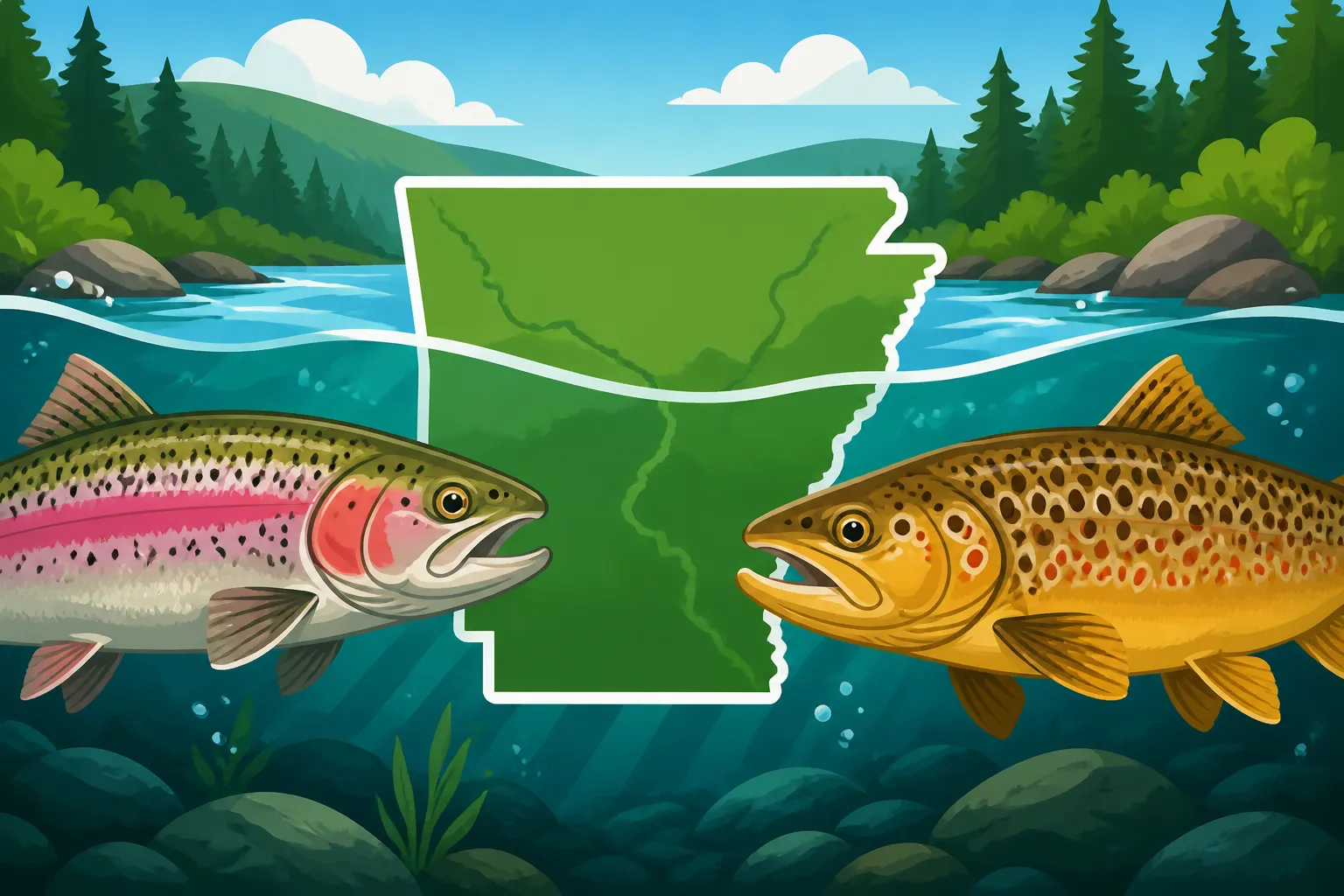
| Appearance | Pinkish-red stripe along lateral line, small black spots all over, often silvery or bluish-green body. | Golden-brown to yellowish belly, dark spots often with lighter halos, no stripe, larger, more defined spots. |
| Average Size | Often 10-18 inches (stockers), can grow larger. | Often 12-24 inches (wild), can exceed 30 inches. Known for trophy potential. |
| Feeding Habits | More opportunistic, insectivorous (nymphs, dries), smaller baitfish. | More predatory (larger baitfish, crayfish), will eat insects. Often nocturnal feeders for larger fish. |
| Preferred Lie | Faster runs, riffles, oxygenated seams. | Deeper pools, undercut banks, heavy cover (logs, rocks). |
| Spawning Season | Spring (typically February-May). | Fall (typically October-December). |
| Origin in AR | Primarily stocked by AGFC, some natural reproduction. | Significant wild reproduction, also stocked. Often more wary. |
When you're out on the water, you'll find that having a general idea of these differences can help you adjust your presentation and target specific holding spots. But remember, a hungry trout is a hungry trout, and both species are magnificent fighters that offer an incredible experience in Arkansas's diverse fishing landscape. Don't forget to visit your local tackle shop or browse on Amazon for the best and latest gear.
Ultimately, the fact that rainbow and brown trout share the same waters in Arkansas is a huge win for anglers. It means more diverse fishing opportunities, requiring adaptable skills and offering the thrill of not knowing which beautiful species will be on the end of your line next. So, gear up, check those regulations, and get ready to enjoy the rich trout fishing heritage the Natural State has to offer. Whether you're casting a fly or drifting a worm, the chance to catch both a vibrant rainbow and a wily brown in the same day is what makes these fisheries truly special.
Disclaimer
This article is for general informational purposes only and does not constitute professional advice. Laws, prices and regulations vary by location and change over time. Consult a qualified professional for guidance on your specific situation.