Largemouth Bass vs Smallmouth Bass: What’s the Difference?
It's incredibly common to look at two dark-colored fish with big mouths and automatically think "bass," but for us anglers, truly understanding the subtle yet significant differences between a largemouth and a smallmouth can completely transform your fishing success. This comprehensive guide will walk you through everything you need to know to confidently identify, locate, and effectively target both largemouth and smallmouth bass in the beautiful waters of Arkansas.
Visual Identification: Spotting the Key Differences
One of the first steps to becoming a more effective angler is learning to identify your target species, and the distinction between largemouth and smallmouth bass, while sometimes tricky at first glance, becomes quite clear once you know what to look for. These aren't just different names for the same fish; they're distinct species with unique characteristics that influence where they live and how they bite.
Jawline and Mouth Size
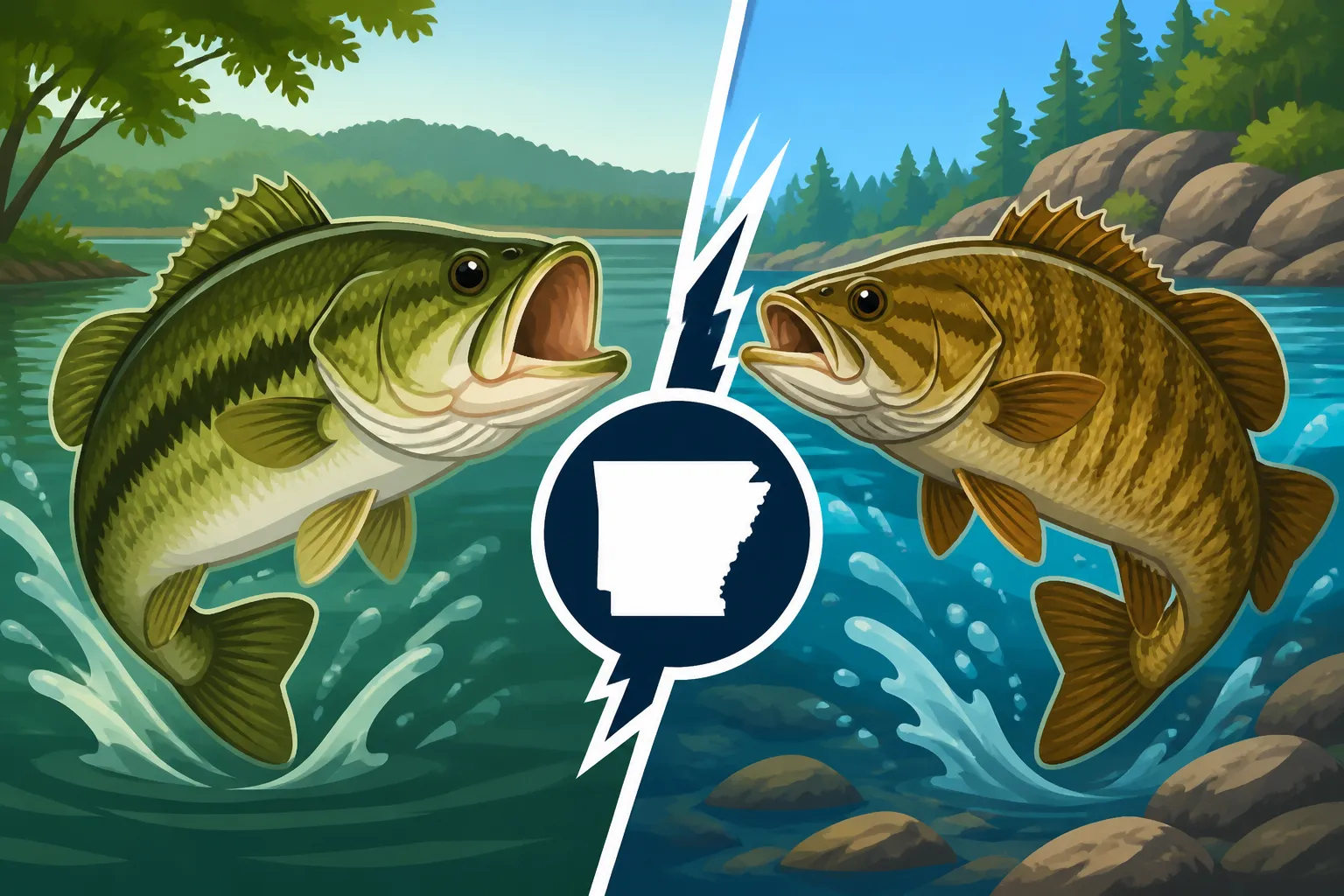
The most common and often easiest way to tell a largemouth from a smallmouth is by looking at their jaw. Imagine the mouth closed. For a largemouth bass, if you drew a vertical line down from the back of its eye, its jawline would extend past that line. It truly has a "large mouth," living up to its name. This big maw is perfect for swallowing large prey whole, which also informs the type of lures they often strike. This characteristic is so defining that once you see it, you'll rarely forget it.
In contrast, the smallmouth bass has a jawline that does not extend past the back of its eye. Its mouth appears smaller and more proportionate to its head. While still a formidable predator, its feeding habits tend to lean towards smaller prey, and this anatomical difference is a strong indicator of that. When you're holding one, take a moment to really examine this feature; it's your number one clue.
Dorsal Fin Separation
Another critical physical trait to inspect is the dorsal fin. Both species have two dorsal fins, but the way they connect (or don't connect) is a dead giveaway. On a largemouth bass, the two parts of the dorsal fin—the spiny front section and the softer-rayed back section—are almost completely separated by a deep notch. It looks like two distinct fins, barely connected, if at all. This deep division is a characteristic you'll notice easily once you know to look for it.
The smallmouth bass, on the other hand, has a dorsal fin that appears much more continuous. While there's still a division between the spiny and soft-rayed sections, it's far less pronounced, almost like a shallow dip rather than a deep cut. The two parts of the fin are clearly connected and flow into one another. It's a subtle difference, but once you've seen a few of each, you'll pick it out quickly.
Body Coloration and Markings
While coloration can vary wildly depending on water clarity, diet, and even mood, there are some general patterns that can help with identification. Largemouth bass typically have a dark, horizontal stripe or a series of blotches running down their side, from gills to tail. This stripe can be very prominent in clear water or quite faded in murky conditions, but it's almost always present to some degree. Their overall body color tends to be a deeper green, sometimes almost black on the back, fading to white or yellow on the belly. How to Identify a Largemouth Bass can provide more detailed visuals.
Smallmouth bass are often described as having a more "bronze" or "brown" hue, often with vertical bars or tiger stripes along their sides, rather than a horizontal line. These vertical markings can be very distinct, especially in cooler, clear water, giving them a rugged, river-dwelling look. Their eyes can also appear redder than those of a largemouth. This difference in marking is a great secondary indicator, especially when you're pulling them from their preferred rocky habitats.
Here's a quick comparison table to keep handy:
| Feature | Largemouth Bass | Smallmouth Bass |
|---|---|---|
| Jawline | Extends past the back of the eye | Does not extend past the back of the eye |
| Dorsal Fin | Deep, distinct separation between fin parts | Shallow connection, appears more continuous |
| Body Markings | Prominent dark horizontal stripe/blotches | Vertical bars or "tiger stripes," often bronze hue |
| Tongue Patch | Usually present | Typically absent |
| Eye Color | Often yellowish to dark | Often reddish-brown |
Habitat and Behavior: Where They Live and How They Act
Understanding where these fish prefer to live and how they behave is just as crucial as knowing what they look like. Their preferred environments dictate not only where you'll find them but also the best tactics and gear to use. Arkansas is blessed with a diverse range of waters, and both species thrive in different parts of it.
Largemouth Bass Preferred Habitats
Largemouth bass are the classic "pond bass" you often picture. They absolutely adore slow-moving, warm, and often turbid waters. Think about those sprawling reservoirs, oxbow lakes, and sluggish river backwaters across Arkansas – that's largemouth territory. They are ambush predators who love structure, which means they'll be hiding out near submerged timber, thick weed beds, lily pads, docks, and brush piles. The more cover, the better for a largemouth. They like to sit patiently, waiting for unsuspecting prey to swim by before exploding out of cover to strike.
In Arkansas, lakes like Lake Ouachita, Lake Conway, and Millwood Lake are prime examples of fantastic largemouth fisheries where you'll find them relating heavily to submerged timber and aquatic vegetation. If you're exploring these areas, keep an eye out for any kind of break in the water or cover that could hide a hungry bass. They're often found shallower than smallmouth, especially during low-light conditions or when actively feeding in the early morning or late evening. Best Bass Fishing Spots on Lake Ouachita, Arkansas offers great insights into specific largemouth hotspots.
Smallmouth Bass Preferred Habitats
Smallmouth bass are the "bronze backs" of moving water. They crave cooler, clearer, and often rocky environments with current. You'll find them predominantly in the fast-flowing, oxygen-rich rivers and large, deep, rocky impoundments of the Ozarks. Think of the mountainous regions of Arkansas with their pristine streams and deep, clear lakes. Smallmouth relate to rocky points, gravel bars, boulders, ledges, and current breaks. They aren't as keen on heavy vegetation as largemouth are. Smallmouth Bass Fishing in Arkansas's Ozark Rivers will tell you more about these specific locations.
Excellent smallmouth fishing can be found in Arkansas's mountain rivers like the Buffalo, Crooked Creek, and stretches of the White River (outside of the cold trout tailwaters, of course). Larger lakes with deep, clear water and rocky structures, such as Bull Shoals Lake and Norfork Lake, are also fantastic for smallmouth. These fish are generally more aggressive and active than largemouth, often chasing down prey in open water or along rocky banks. If you're wading a rocky stream or fishing a deep, clear impoundment, you're likely in smallmouth country.
Fishing Strategies: Targeting Each Species
Knowing where these bass live and what they look like is only half the battle. To truly catch them, you need to adapt your fishing strategy, from your lure selection to your retrieve technique. The subtle differences in their behavior mean that what works for one might not be as effective for the other.
Largemouth Bass Fishing Techniques and Lures
Because largemouth bass are ambush predators dwelling in cover, your fishing strategy should focus on getting your lure right into their living room. Heavy cover requires weedless presentations. Think about Texas-rigged soft plastics, jig-and-pig combinations, or even topwater frogs and buzzbaits worked over lily pads. These lures are designed to be fished through the thick stuff without getting snagged, presenting a juicy meal directly to a hidden bass. When picking out lures, a good starting point is often online retailers like Amazon, where you can browse a vast selection and read reviews from other anglers to help narrow down your choices.
You'll often want to make repeated casts to the same piece of cover, really trying to provoke a strike. Slow retrieves and "flipping and pitching" techniques are deadly for largemouth, allowing you to quietly drop your bait into tight spots. Crankbaits and spinnerbaits are also effective, especially when fished along the edges of weed lines or submerged timber. Your gear might lean towards heavier action rods and stronger lines to pull those big fish out of dense cover. For a deeper dive into techniques, check out Best Lures for Largemouth Bass Fishing.
Smallmouth Bass Fishing Techniques and Lures
Smallmouth bass, living in clearer water and often chasing prey, respond well to different presentations. They are known for their aggressive strikes and powerful fights, often jumping clear out of the water. Your lure selection for smallmouth will typically favor smaller, more agile baits that mimic crayfish, minnows, or insects. Ned rigs, drop shots, small crankbaits, tubes, and spinnerbaits are all excellent choices. For those specialized light-action rods and finesse baits perfect for smallmouth, you'll find plenty of options and reviews on platforms such as Amazon, allowing you to compare different brands and price points easily.
Spinners, small spoons, and even fly fishing with streamers can be incredibly effective in rivers and clear lakes. The key is often to cover water and present your lure in or near current breaks, rock piles, and ledges. Unlike largemouth, you might not always be targeting dense cover but rather subtle changes in depth or structure where smallmouth can hide and ambush. Lighter rods and line are often preferred, allowing for better feel and more precise casting. When fishing for smallmouth in Arkansas's moving waters, remember that current is your friend; fish the seams, eddies, and behind obstacles. You'll find more information on targeting these fighters in Best Bait for Smallmouth Bass in Rocky Streams.
Taste and Table Fare: Enjoying Your Catch
Once you've landed your prize, many anglers wonder about the culinary aspect. Both largemouth and smallmouth bass are considered edible, but there are some differences in taste and texture that can influence whether you decide to keep them for dinner. Always remember to check Arkansas Fish Size and Daily Limits before you decide to keep any fish.
Flavor and Texture of Largemouth Bass
Largemouth bass are a popular choice for the dinner table across Arkansas. Their flesh is typically white, flaky, and has a mild, somewhat earthy flavor. The taste can vary a bit depending on the water quality and diet of the fish. Those caught from very warm, muddy waters might have a stronger "muddy" taste, while bass from clearer, cooler lakes tend to be cleaner tasting. Many anglers prefer to fillet them, skin them, and then prepare them by frying, baking, or grilling.
To mitigate any potential earthy flavor, some anglers soak the fillets in milk or a saltwater brine for an hour or two before cooking. This simple step can make a big difference, especially if you're not sure about the water quality of your catch. When properly prepared, largemouth bass makes for a delicious meal, offering a good source of lean protein.
Flavor and Texture of Smallmouth Bass
Smallmouth bass are often lauded by anglers as being superior table fare compared to their largemouth cousins. Their flesh is generally firmer, flakier, and has a milder, sweeter flavor. This is often attributed to their preferred habitat—colder, clearer, and more oxygenated waters—which tends to result in a cleaner-tasting fish. If you're lucky enough to catch a legal-sized smallmouth that you intend to keep, you're in for a treat.
Like largemouth, smallmouth are best filleted and skinned. They hold up well to various cooking methods, including frying, grilling, or pan-searing. The firm texture makes them particularly good for recipes where you want the fish to hold its shape. Ultimately, both species offer a fine meal, but if you're comparing them side-by-side strictly on taste, many anglers give the edge to the smallmouth. Even something as simple as a waterproof fishing guide or a book on Arkansas fish identification can be easily ordered from Amazon before your next trip, helping you not only identify your catch but perhaps even find a new recipe.
Conservation and Responsible Angling
No matter which bass species you're targeting, practicing responsible angling is paramount to ensuring healthy fish populations for generations to come. This means respecting regulations, practicing catch-and-release when appropriate, and being mindful of the fish's well-being.
Understanding Catch and Release Practices
Catch and release is a vital part of modern sport fishing, especially for bass, which are highly prized game fish. If you plan to release a fish, handle it as little as possible and with wet hands to protect its slime coat. Avoid dragging fish on dry land or boat carpets. Use appropriate tools like de-hookers to remove hooks quickly and gently. If the fish is deeply hooked, it's often best to cut the line as close to the hook as possible rather than tearing internal organs.
For bass, especially larger breeding-size fish, releasing them allows them to continue contributing to the fishery. Many tournaments are catch-and-release, emphasizing the sport rather than the harvest. Knowing when to release and when to keep (within legal limits) is a personal choice, but always prioritize the health of the fish you send back into the water.
Following Arkansas Regulations
Arkansas has specific regulations for both largemouth and smallmouth bass, which can vary by water body. These regulations often include minimum length limits and daily creel limits to protect fish populations and ensure sustainable fishing. For example, Largemouth Bass Daily Limit in Arkansas typically sets a statewide limit, but special regulations may apply to certain lakes or rivers. Similarly, Smallmouth Bass Rules on Arkansas's Moving Waters Statewide specify limits and minimum lengths for these sensitive river-dwelling fish.
Before you head out, always consult the current Arkansas Game and Fish Commission (AGFC) regulations for the specific body of water you plan to fish. These regulations are designed to protect our fisheries, and adhering to them is crucial. Ignorance of the law is not an excuse, and game wardens are out there making sure everyone is playing by the rules. It also helps to be informed about where Arkansas Fishing License Penalties and Requirements might come into play if you're not compliant.
Protecting Habitats and Ecosystems
Beyond just the fish themselves, responsible angling extends to protecting the habitats they depend on. This means minimizing your impact on the environment. Avoid littering, properly dispose of fishing line and other waste, and be mindful of invasive species. Clean your boat and gear thoroughly when moving between different bodies of water to prevent the spread of harmful plants and animals.
By understanding the unique needs of largemouth and smallmouth bass, respecting their habitats, and adhering to fishing regulations, we can all contribute to a thriving Arkansas fishing scene for years to come. Whether you're chasing that elusive trophy largemouth in a timber-filled cove or battling a feisty smallmouth in a rocky Ozark stream, the joy of the catch is enhanced by the knowledge that you're fishing responsibly.
Disclaimer
This article is for general informational purposes only and does not constitute professional advice. Laws, prices and regulations vary by location and change over time. Consult a qualified professional for guidance on your specific situation.