Lock and Dam Fishing Spots on the Arkansas River
One of the most intimidating yet rewarding places to cast a line in Arkansas can be near the formidable lock and dam structures along the Arkansas River. Many anglers shy away from these areas, seeing them as complex or dangerous, but they are absolutely teeming with fish. This comprehensive guide will break down why these spots are so productive, highlight some prime locations, detail what you can expect to catch, and equip you with the knowledge and safety tips needed to confidently tackle fishing at the Arkansas River's locks and dams.
Why Lock and Dam Areas Are Fishing Hotspots
It’s easy to look at a massive concrete and steel structure spanning a river and think, "How could anything live here?" But for fish, these man-made barriers are often magnets, creating unique ecological conditions that draw in massive schools and hungry predators alike. Understanding the dynamics at play here is key to unlocking their potential.
Understanding Water Flow and Current
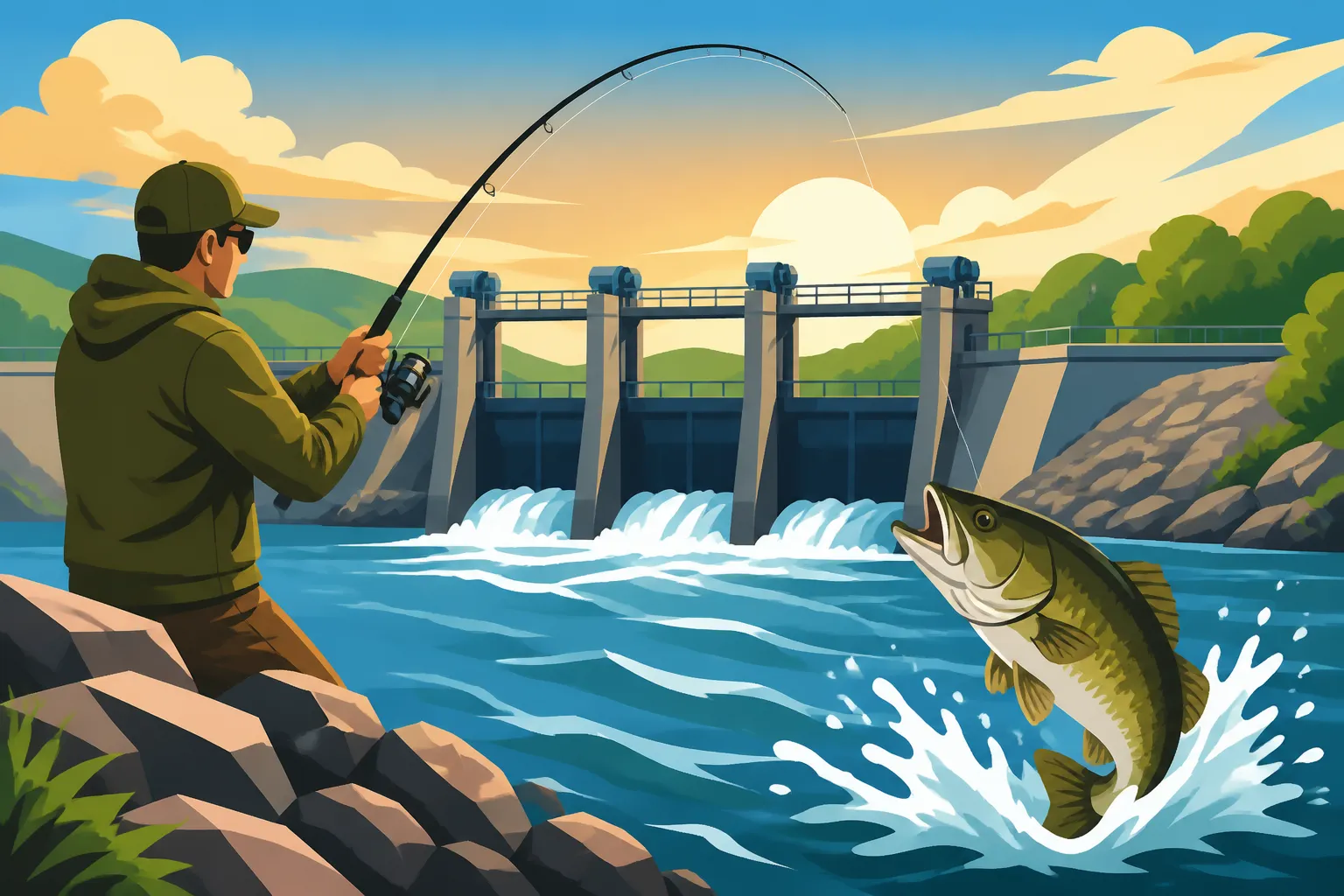
Locks and dams fundamentally alter the natural flow of a river. Below a dam, you’ll find turbulent, oxygen-rich waters created by the spillway gates or generation turbines. This "boil" area, as anglers often call it, is a chaotic but nutrient-rich zone. The constant movement of water disorients baitfish and washes down food from upstream, making it an irresistible feeding ground for larger species. Fish don't have to work as hard to find a meal; the river delivers it right to them. Similarly, the powerful currents here concentrate fish in specific areas, like eddy lines and current seams, where they can hold out of the main flow, conserving energy while waiting for food to drift by. Mastering how to read this moving water is perhaps the most crucial skill you can develop for fishing these spots.
Natural Funnel for Baitfish
Think of a lock and dam as a giant choke point in the river system. As fish migrate upstream or downstream, they must contend with this barrier. This is especially true for baitfish – shad, minnows, and small sunfish – that get funneled into narrower channels or are displaced by the powerful currents. When water is being released through the dam, these baitfish often get sucked through, disoriented and vulnerable. This creates an all-you-can-eat buffet for predatory fish like bass, catfish, and even the occasional striped bass. Anglers often report seeing huge schools of shad flickering on their sonar, a sure sign that bigger fish are lurking nearby, ready to ambush their next meal.
Abundant Structure and Cover
Beyond the current, locks and dams provide an incredible amount of structure. The concrete walls, rock riprap, submerged gates, and scour holes created by years of water erosion offer excellent cover and ambush points for fish. These varied depths and contours give fish places to hide from predators, escape strong currents, and ambush prey. Deep scour holes below the dam are often home to giant blue catfish and flatheads, while the riprap banks can hold schools of crappie or largemouth bass. Even the lock chambers themselves, when not in use, can become temporary havens for fish, offering calmer, deeper water. Exploring these structural elements with your electronics or by slowly working your baits can reveal hidden honey holes.
Prime Lock and Dam Locations on the Arkansas River
The Arkansas River boasts a series of lock and dam systems that facilitate navigation and manage water levels, but they also create fantastic fishing opportunities. Knowing which ones offer the best access and what species tend to congregate where can make all the difference.
Fishing Below the Dam
The areas immediately below the dams are often the most productive, though they can also be the most challenging due to strong currents and safety considerations. The turbulent "boil" water directly below the gates is a prime spot for catfish, particularly blue and channel cats. These fish are drawn to the oxygen-rich water and the abundance of stunned baitfish. For techniques, think heavy-duty bottom fishing rigs with cut bait or chicken liver. Many anglers will anchor upriver and drift their baits into the boil or fish from shore if access allows, casting heavy weights to hold bottom.
Further downstream, as the current begins to mellow, you'll find eddy lines and current seams where the fast water meets slower water. These are classic ambush points for bass – both largemouth and spotted bass, and often even some hard-fighting stripers. Jerkbaits, crankbaits, and large swimbaits can be incredibly effective when cast into these current breaks. Look for points, submerged rock piles, or old timber that create these current disruptions. The trick is to find that sweet spot where fish can hold comfortably out of the main current but still have easy access to the food supply passing by. You might want to consult resources like "Best Bass Fishing Spots on the Arkansas River" for more species-specific tips.
Fishing Above the Lock
While the action below the dam can be intense, don't overlook the waters above the lock and dam. These areas typically feature calmer, deeper pools, often with distinct river channels and backwater areas that hold different species and present different fishing challenges.
Above the locks, you'll often find more stable conditions, making it a great place to target crappie and panfish, especially around submerged brush piles, standing timber, or old riverbed structure. Vertical jigging with small jigs or live minnows near these features can be incredibly productive. Bass, especially largemouth, will also frequent these calmer, often shallower areas, particularly during their pre-spawn and post-spawn phases. Look for lily pads, fallen trees, and creek mouths that feed into the main river. Topwater lures, spinnerbaits, and Texas-rigged worms are excellent choices here.
One notable spot is the area around Dardanelle Lock & Dam. Both above and below, this area is known for its incredible fishing, particularly for channel catfish and blue catfish. Another popular location is the Ozark-Jeta Taylor Lock & Dam, which consistently produces good numbers of bass and catfish. Even closer to larger population centers, you'll find good spots like the Toad Suck Ferry Lock & Dam near Conway, offering diverse opportunities. If you're looking for professional assistance to navigate these waters, a quick search on a platform like FishingBooker can connect you with local guides who specialize in fishing these complex structures.
Top Species and Techniques for Arkansas River Locks and Dams
The beauty of fishing the Arkansas River locks and dams is the incredible diversity of species you can encounter. From hard-fighting catfish to acrobatic bass and delicious crappie, there's something for every angler.
Targeting Catfish: Blue, Channel, and Flathead
Catfish are arguably the kings of the lock and dam areas, especially below the dam. The turbulent, oxygen-rich water and abundant food supply create ideal conditions for these bottom-dwellers.
- Blue Catfish: These are the big boys you often hear about in record books. They thrive in strong currents and deep scour holes. Your best bet for blues is a heavy bottom rig with a 3-4 oz pyramid or no-roll sinker, a heavy-duty leader, and a large circle hook. Fresh cut bait, like shad, skipjack herring, or even chunks of carp, are irresistible to them. Fish in the main current, especially in the deeper sections right below the dam.
- Channel Catfish: More widespread and often found in slightly calmer waters than blues, but still abundant in these areas. Chicken liver, shrimp, and commercial stink baits are excellent choices for channels. A slip-sinker rig with an egg sinker or a simple Carolina rig works well. You can find them in eddy lines, around riprap, and in the calmer sections above the lock. For more specific advice, check out "Where to Catch Catfish on the Arkansas River".
- Flathead Catfish: These solitary predators prefer live bait. A large live bluegill, sunfish, or even a small carp, fished on a stout bottom rig near submerged timber or large rock piles, is your best bet. Flatheads are ambush predators, so target areas with good cover and slightly slower current.
Remember, when targeting big catfish, heavy tackle is a must. A stout rod, a reel spooled with 30-50lb test monofilament or braided line, and strong hooks will prevent heartbreak. For tips on specific baits, refer to "Best Bait for Blue Catfish in Arkansas" or "What Bait Catches the Biggest Catfish in Arkansas?".
Chasing Bass: Largemouth, Spotted, and Striped
Bass fishing around locks and dams can be incredibly exciting, as these fish are agile and use the current to their advantage.
- Largemouth Bass: While often associated with calmer waters, largemouth will absolutely thrive in the calmer sections above the lock, particularly around any vegetation, laydowns, or stump fields. When water is being released through the dam, they can also be found in eddy lines below the dam, particularly where there's overhead cover. Spinnerbaits, swim jigs, Texas-rigged plastics, and crankbaits that mimic shad are all great choices.
- Spotted Bass (Kentucky Bass): These highly aggressive bass love current and rocky structure. You'll find them holding in the seams and eddies below the dam, often near riprap banks or submerged rock piles. Small crankbaits, jig heads with grub trailers, and shaky head worms are very effective. They fight hard for their size and are a blast to catch on lighter tackle.
- Striped Bass: The Arkansas River can produce some true trophy striped bass, especially around the lock and dam systems where baitfish are abundant. Stripers are powerful open-water predators that feed heavily on shad. Live shad, large topwater plugs, swimbaits, and deep-diving crankbaits are prime lures. Target the turbulent water below the dam and major current breaks. These fish hit hard and offer a thrilling fight, making them a top target for many. Learning "Best Bass Fishing Spots on the Arkansas River" can help you narrow down your search.
Pursuing Crappie and Panfish
Don't forget the panfish! While not always the first target, crappie and various sunfish species (bluegill, redear sunfish) can be incredibly abundant in the calmer areas, especially above the lock.
- Crappie: Look for crappie schooled up around submerged timber, brush piles, or bridge pilings in the calmer, deeper sections of the river above the dam. Vertical jigging with 1/16 or 1/8 oz jigs tipped with soft plastic bodies (like tubes or curly tails) or small live minnows is the go-to technique. In spring, they'll move shallower, but year-round, structure is key.
- Panfish (Bluegill, Redear): These smaller but feisty fish are perfect for beginners or when you just want consistent action. They're often found in the shallower, calmer backwaters above the lock, especially around any vegetation. A simple worm under a bobber or small beetle spins will yield plenty of bites.
Essential Gear and Safety Considerations
Fishing around locks and dams means dealing with powerful water and unique challenges. Having the right gear and, more importantly, understanding the safety protocols, are absolutely crucial.
Recommended Tackle and Lures
Because of the strong currents and potential for large fish, your gear needs to be robust.
- Rods and Reels: For catfish and striped bass, medium-heavy to heavy action rods (7-9 feet) paired with baitcasting reels spooled with 20-50 lb braid or monofilament are ideal. This gives you the backbone to battle strong fish and manage heavy weights in current. For bass and crappie, a medium action spinning or baitcasting rod (6.5-7 feet) with 8-15 lb line is sufficient.
- Line: Braided line is often preferred for its sensitivity and strength-to-diameter ratio, especially when bottom fishing in current. A fluorocarbon leader (20-40 lb for catfish/stripers, 8-12 lb for bass/crappie) can provide abrasion resistance and invisibility.
- Terminal Tackle:
- Hooks: Circle hooks (4/0 to 8/0) are excellent for catfish, ensuring a hook-set in the corner of the mouth and minimizing gut-hooking. Treble hooks are good for artificial lures.
- Sinkers: Pyramid, no-roll, or flat bell sinkers (1-6 oz, depending on current strength) are best for holding bottom.
- Swivels: Heavy-duty barrel or ball-bearing swivels prevent line twist.
- Lures and Baits:
- Catfish: Fresh cut shad, skipjack, chicken liver, prepared stink baits, live bluegill. For tips on specific baits, check "Channel Catfish Fishing Tips for Beginners".
- Bass: Deep-diving crankbaits, lipless crankbaits, heavy spinnerbaits, large swimbaits, jerkbaits, heavy jig heads with plastics, Texas-rigged worms.
- Crappie/Panfish: Small jig heads (1/16-1/8 oz) with soft plastic tubes or curly tails, small beetle spins, live minnows, worms.
Navigating Risks and Regulations
Safety is paramount when fishing around locks and dams. These are working industrial sites, and the water dynamics can change rapidly and unexpectedly.
- Strong Currents: Always be aware of the currents, especially below the dam. Never wade or position your boat too close to the gates or spillway. Water can be released at any time, creating dangerous surges. Maintain a safe distance, usually marked by warning signs, buoys, or cables.
- Boat Traffic: These are navigation channels. Large barges and towboats use the locks regularly. Always yield to commercial traffic and be aware of your surroundings. The prop wash from these vessels can create significant waves.
- Slippery Surfaces: Concrete banks and rocky riprap can be extremely slippery, especially when wet or covered in algae. Wear appropriate footwear with good traction.
- Personal Flotation Devices (PFDs): If fishing from a boat, always wear a PFD. If fishing from shore near strong currents, consider wearing one, especially if you're not a strong swimmer or are fishing alone.
- Regulations: Always check the current Arkansas Game and Fish Commission regulations. Specific rules may apply to fishing within certain distances of locks and dams, or there might be special limits for certain species in these high-traffic areas. This includes specific bait restrictions or gear limitations. Understanding the general "Arkansas Fishing Regulations Guide" is your first step. Remember, even during the "Arkansas Free Fishing Weekend Guide", standard safety rules and gear restrictions still apply.
| Lock & Dam Site | Target Species (Primary) | Common Techniques | Best Access Type | Key Considerations |
|---|---|---|---|---|
| Dardanelle Lock & Dam | Catfish (Blue, Channel), Bass, Striper | Bottom Rigs, Live Bait, Crankbaits, Jigs | Boat, Bank | Known for big catfish; strong currents below dam. |
| Ozark-Jeta Taylor Lock & Dam | Bass (Largemouth, Spotted), Catfish, Crappie | Spinnerbaits, Jigs, Cut Bait, Minnows | Boat, Bank | Diverse fishery, good structure. |
| Toad Suck Ferry Lock & Dam | Bass, Catfish, Crappie | Topwater, Worms, Bottom Rigs, Jigs | Boat, Bank | Popular access, varied habitat above and below. |
| Murray Lock & Dam | Catfish, Bass, Crappie | Cut Bait, Crankbaits, Jigs | Boat, Bank | Convenient access near Little Rock. |
Fishing these spots can be incredibly productive, but it requires respect for the power of the river and adherence to safety guidelines. Always prioritize safety over catching a fish. If you're new to the area or feel a bit overwhelmed, consider hiring a local guide through platforms like FishingBooker. They can provide invaluable local knowledge and ensure a safe and successful trip.
Disclaimer
Please note that fishing conditions and regulations can change frequently. Always consult the latest Arkansas Game and Fish Commission regulations before heading out. Safety should always be your top priority when fishing, especially in powerful river environments like those found around locks and dams.