Where to Catch Crappie on Lake Ouachita
Lake Ouachita is a jewel, no doubt, but its sheer size and incredible clarity can make finding crappie feel like searching for a needle in a haystack, especially if you're not familiar with its unique features. It’s easy to feel overwhelmed by all that water, wondering where to even begin your hunt for those speckled beauties. This guide is here to cut through that confusion, breaking down exactly where crappie like to hang out on Lake Ouachita throughout the year and the best ways to get them to bite.
Understanding Lake Ouachita's Crappie Habitat
Lake Ouachita isn't just a big pool of water; it's a dynamic ecosystem with specific areas that crappie absolutely love. To consistently catch them, you need to think like a crappie and understand their preferred hideouts. It's not just about tossing a line in and hoping for the best; it's about strategic placement based on the lake's structure and the fish's natural instincts.
The Influence of Submerged Timber and Brush Piles
One of the defining features of Lake Ouachita, and a huge reason it's such a fantastic crappie fishery, is its abundance of submerged timber. When the lake was impounded, vast forests were flooded, leaving behind an underwater jungle of trees, stumps, and brush. Crappie, being ambush predators and structure-oriented fish, absolutely thrive in these environments. They use the timber for cover from larger predators like bass and stripers, as well as prime ambush points for baitfish.
Finding these submerged structures is key. Many of the old creek beds and river channels that were flooded now run through these timber stands. Crappie will often position themselves at various depths within this timber, depending on the time of day, sunlight penetration, and water temperature. During the cooler months, they might hug tighter to the deeper timber, while in warmer periods, they could be suspended higher up in the water column among the branches. Look for areas where old logging roads or clearings might have been, as these often create unique pockets within the timber that crappie will use. Many anglers even sink their own brush piles, and if you can find one of these community or privately-maintained spots, you've hit a crappie goldmine. These piles provide dense cover and attract baitfish, creating a perfect feeding ground.
Seasonal Movements and Deep Water Haunts
Crappie on Lake Ouachita, like most places, are highly influenced by the seasons, which dictates their depth and location. Understanding these movements is crucial for success.
- Spring (Pre-spawn and Spawn): As water temperatures rise into the 50s and 60s, crappie begin their journey from deeper wintering holes towards shallower spawning flats. During the pre-spawn, they'll often stage in channels and creek bends adjacent to these flats, often holding around 15-25 feet deep before moving even shallower. Once the water hits the sweet spot, typically in the low to mid-60s, they push into incredibly shallow water, often less than 5 feet, to spawn. This is when you'll find them nestled in the timber, around docks, or near rocky shorelines in protected coves.
- Summer: After the spawn, crappie transition to deeper, cooler water. They'll often suspend over submerged timber, particularly near creek channels, main lake points, and humps where they can access baitfish. You might find them anywhere from 15 to 40 feet deep, often relating to the thermocline (the layer of water where temperature changes rapidly). They prefer areas with good oxygen levels and cooler temperatures, so moving deeper is a natural migration.
- Fall: As water temperatures cool down, crappie become more active and start moving back towards shallower feeding areas, though not as shallow as the spawn. They'll often be found around main lake points, submerged islands, and creek channel bends, chasing baitfish that are also moving shallower. This is a great time for consistent action as they fatten up for winter.
- Winter: During the coldest months, crappie move into deep wintering holes. They'll congregate in tight schools in deep creek channels, often near ledges or pronounced drops. On Lake Ouachita, this can mean depths of 30-60 feet or even more, usually suspended just above the bottom or within deep timber. They become less active, but if you can locate a school, you can often catch multiple fish from the same spot. Knowing how to find crappie in deep water is critical during this time.
Prime Crappie Fishing Locations on Lake Ouachita
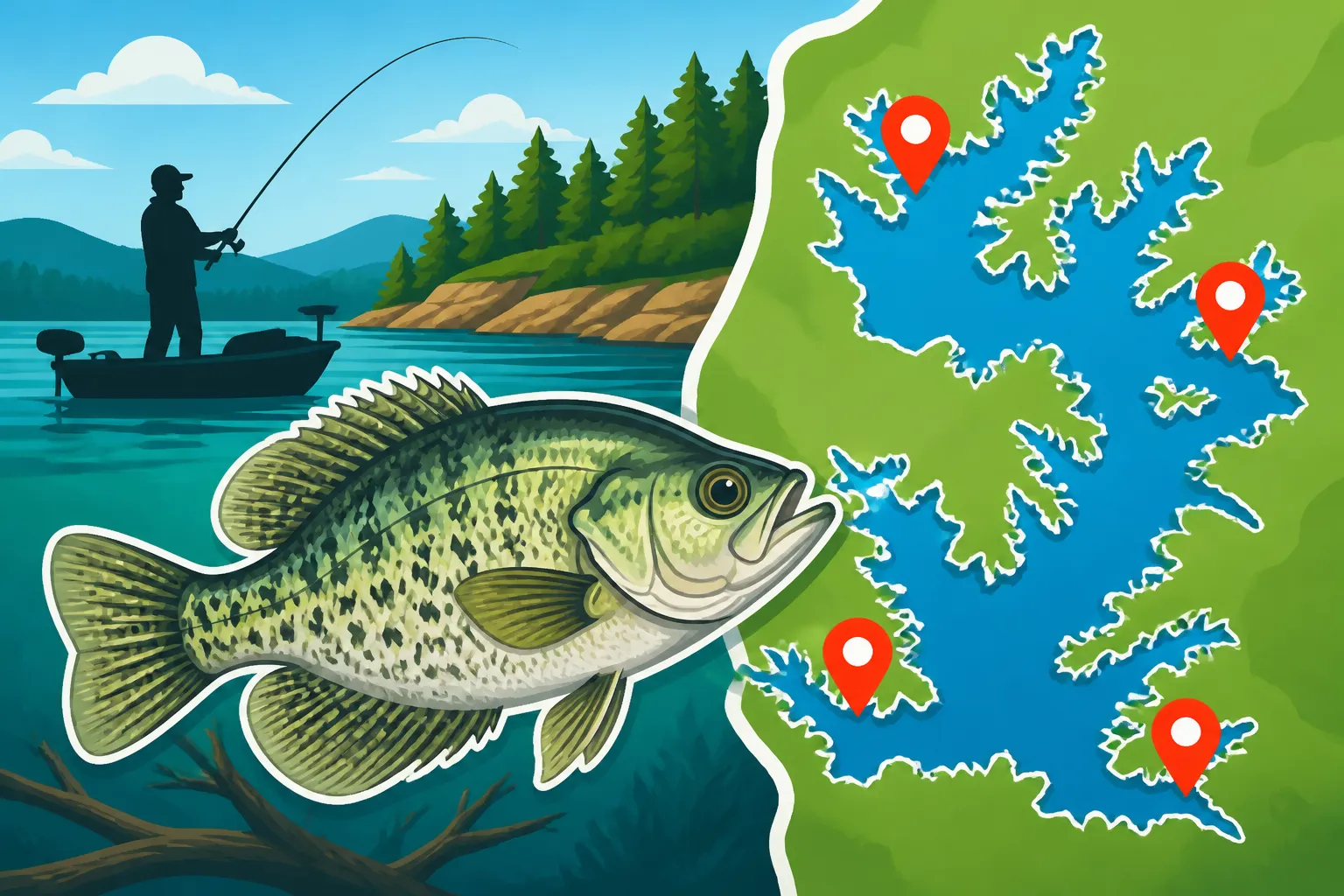
Lake Ouachita boasts numerous coves, bays, and main lake areas that consistently produce crappie. Knowing the general "hot zones" will drastically improve your chances.
Major Creeks and Coves for Spawning Success
When the crappie are ready to spawn in the spring, they flock to specific protected areas. These locations offer warmer, shallower water, abundant cover, and often a good supply of baitfish.
- Buckville Area: This entire arm of the lake, particularly the creeks branching off from it, is a renowned crappie hotspot during the spring. The numerous small coves and abundant standing timber offer ideal spawning conditions. Look for areas with a mix of submerged brush and rocky bottoms.
- Brady Mountain Area: Similar to Buckville, the coves and creek channels around Brady Mountain provide excellent spring crappie habitat. The structure here is plentiful, with lots of standing timber and brush piles. Anglers often find success targeting visible structures like docks and fallen trees, as well as using their electronics to pinpoint submerged cover.
- Denby Bay: This large bay features several smaller arms and a good amount of submerged timber, making it another prime spring spawning ground. The water here can warm up a bit faster than the main lake, drawing crappie in earlier. Focus on the shallow flats and points within these smaller coves.
- Big Mazarn Creek: This significant creek system offers a diverse range of crappie habitat. In spring, explore its shallower arms and feeder creeks. There are also deeper pockets and channel swings that hold crappie year-round.
- Irons Fork Creek: Located on the western side of the lake, Irons Fork is another excellent choice, especially as you move further back into its various branches. The dense cover and relatively shallower water make it attractive for spawning fish.
When fishing these areas during the spawn, remember that crappie will be very shallow. A sensitive rod and light line are crucial for detecting subtle bites. Minnows under a bobber or small jigs pitched carefully into cover are often irresistible.
Deep Water Structures and Channel Bends for Winter and Summer
Once the spawning frenzy is over, or when the water gets too cold or too hot, crappie retreat to deeper, more stable environments. This is when your boat electronics become your best friend.
- Main Lake Humps and Points: Lake Ouachita has numerous submerged humps and long, tapering points that extend into the main lake. During summer and winter, crappie will suspend around these structures, especially if there's timber or brush on them. Fish the "shoulders" of these humps where crappie can move up and down with ease.
- Creek Channel Bends: The old creek channels that wind through Lake Ouachita are highways for crappie movement. Focus on the sharp bends, especially where the channel comes close to a point or a flat. These bends often hold deep schools of crappie that are relating to submerged timber or rocky ledges. Locations like the main channel of Buckville, Brady Mountain, and Big Mazarn are excellent places to trace with your depth finder.
- Areas Near the Dam: The deeper waters closer to the Lake Ouachita dam often hold significant schools of crappie, especially in winter. The sheer depth and stability of the water make it a reliable spot when other areas are slow. Look for crappie suspended around 40-60 feet over brush piles or deep rock formations. These spots can be found by methodically graphing the bottom with your sonar.
- Sunken Roads and Bridges: While harder to locate without precise mapping, old roads and bridges that cross the former riverbed are magnetic to crappie. These structures provide distinct changes in the bottom contour and excellent cover. Many of the reputable guides on FishingBooker who specialize in Lake Ouachita crappie fishing have these "secret spots" dialed in, offering an advantage if you're looking for consistent success.
- River Channel Ledges: The original Ouachita River channel, now deep underwater, forms prominent ledges and drop-offs that crappie use as highways and feeding grounds. Fish the edges where the channel drops off into deeper water, especially where there's standing timber nearby. These ledges can be productive year-round, but particularly in fall and winter.
When targeting these deep-water crappie, vertical jigging, drop-shotting, or slow trolling with jigs or live minnows are effective techniques. Your electronics will be crucial for not only finding the structure but also seeing the schools of crappie.
Effective Techniques for Lake Ouachita Crappie
Knowing where to fish is only half the battle; knowing how to fish for crappie on Lake Ouachita is just as important. The methods you employ will often depend on the season and the specific structure you're targeting.
Jigging and Live Bait Strategies
These are the bread-and-butter techniques for crappie fishing on Lake Ouachita, versatile enough for almost any season or situation.
- Vertical Jigging Timber and Brush Piles: This is probably the most popular and effective way to catch crappie, especially when they are relating to vertical cover like standing timber or brush piles. Use a light action rod, often a 6 to 7-foot spinning rod, with 4-6 lb test fluorocarbon or monofilament line. Drop small jigs (1/16 to 1/8 oz) or jigging spoons directly into the cover, watching your sonar for fish. The key is to get your bait right into the crappie's strike zone without getting snagged. Popular jig colors on Lake Ouachita include chartreuse, pearl, black and chartreuse, and natural shad patterns. Many anglers tip their jigs with a minnow for added scent and appeal.
- Technique Tip: When jigging, pay close attention to the fall of your bait. Often, crappie will hit a jig on the drop. Once it reaches the desired depth, a slight twitch of the rod tip, followed by a pause, is often enough to entice a bite. Experiment with different retrieve speeds and pauses until you find what the fish want. Sometimes, a subtle lift and drop is all it takes.
- Minnow Fishing Under a Bobber: This classic method is incredibly effective, especially during the spring spawn when crappie are shallow and in thick cover. Rig a small minnow on a light wire hook (size 2 or 4) suspended under a slip bobber. Adjust the bobber stopper to the depth where you expect the crappie to be. Cast the rig near brush piles, fallen trees, or dock pilings. The bobber allows the minnow to swim naturally and keeps it suspended at a precise depth. Live minnows are often irresistible to crappie, particularly in stained water. Knowing the best live bait for crappie fishing can significantly boost your success.
- Technique Tip: Don't be afraid to experiment with the depth of your minnow. Crappie often suspend just above cover, so start by setting your bobber to fish just above the top of the brush, then adjust deeper or shallower if you're not getting bites. A slight ripple on the water can make the bobber twitch, giving your minnow extra action.
Trolling and Spider Rigging for Covering Water
When crappie are scattered or holding over vast areas of deep water, covering a lot of ground quickly becomes essential.
- Slow Trolling with Jigs or Crankbaits: This technique is fantastic for locating schools of crappie in deeper water, especially during summer and fall. Use light tackle and troll small jigs, sometimes tipped with minnows, or tiny crankbaits designed for crappie. Maintain a slow speed (around 0.5 to 1.5 mph) and vary your depths by using different jig weights or crankbait diving depths. You can troll along creek channels, over submerged humps, or across large flats. This method allows you to present baits to fish at various depths simultaneously until you find their preferred feeding zone.
- Technique Tip: Pay close attention to your rod tips. Crappie bites can be incredibly subtle, often feeling like a slight tap or a bit of added weight. Keep your lines spread out to cover a wider path, and when you get a bite, note the depth and location to try and replicate your success.
- Spider Rigging: This technique takes trolling to the next level by using multiple rods (often 4-8 or even more) fanned out from the front of the boat. Each rod will have a jig or minnow rig set at a different depth or with a different bait, allowing you to quickly determine what the crappie prefer on a given day. This is particularly effective when crappie are holding loosely in deep open water or over scattered timber. Spider rigging is also excellent for fishing along deep creek channel bends or humps, allowing you to present a wide "net" of baits as you slowly move your boat. Many anglers use custom rod holder setups for this.
- Technique Tip: When spider rigging, make sure your lines are clearly separated to avoid tangles. Use different colored line or unique rod markers to identify which rig is which. Once you locate a school of fish, you can often turn around and make repeated passes over the productive area. This is a favorite technique for guides on FishingBooker when chasing slab crappie on Lake Ouachita, as it maximizes coverage and increases the chances of hitting a feeding fish.
Gear and Tips for a Successful Crappie Trip
Having the right equipment can make all the difference between a frustrating day and a successful one, especially on a lake as expansive and diverse as Ouachita.
Essential Rods, Reels, and Line
Crappie fishing, while sometimes seen as simple, truly benefits from specialized tackle that helps you detect their often light bites and fight them effectively.
- Rods: A good crappie rod is typically light to ultralight action, ranging from 6 to 10 feet in length. Shorter rods (6-7 feet) are great for vertical jigging around tight cover, offering more control. Longer rods (8-10 feet), sometimes called "spider rig rods" or "trolling rods," are excellent for casting lighter jigs a long distance or for spider rigging from the front of the boat, helping spread out your lines. The key is sensitivity; you want to feel every subtle "tick" or "thump." Brands like B'n'M Poles or Mr. Crappie offer excellent crappie-specific rod options.
- Reels: Small spinning reels (size 1000 or 2000) are perfect for crappie. They are lightweight, balance well with light rods, and have smooth drags, which are crucial when fighting a good-sized crappie on light line.
- Line: Light line is paramount for crappie fishing. 4 to 6-pound test monofilament or fluorocarbon is standard. Monofilament offers good knot strength and stretch, which can be forgiving. Fluorocarbon is nearly invisible underwater, has less stretch for increased sensitivity, and sinks, which can be an advantage when jigging deeper. Some anglers use braided line (8-10 lb test) for its incredible sensitivity and strength, often adding a 4-6 lb fluorocarbon leader. The New Possession Limit Rule for Arkansas Anglers means you can focus more on the daily catch and less on total storage.
| Season | Primary Location | Preferred Depths | Key Techniques | Recommended Bait/Lures |
|---|---|---|---|---|
| Spring | Shallow coves, creek arms, timber, docks | 2-10 feet | Vertical Jigging, Bobber Fishing | Small jigs (chartreuse, white), live minnows |
| Summer | Deep creek channels, main lake humps, suspended timber | 15-40+ feet (thermocline) | Trolling, Spider Rigging, Deep Jigging | Small crankbaits, jigs (shad patterns), live minnows |
| Fall | Main lake points, creek channel bends, submerged islands | 10-25 feet | Trolling, Jigging, Casting | Jigs (natural colors), minnows, small spinnerbaits |
| Winter | Deep creek channels, dam area, deep timber | 30-60+ feet | Vertical Jigging, Deep Spider Rigging | Jigs (darker colors), live minnows |
Electronics and Mapping for Finding Hidden Gems
On a lake as vast and clear as Ouachita, modern electronics are not just a luxury; they are a necessity for serious crappie anglers.
- Depth Finders/Sonar: A quality depth finder with good 2D sonar, DownScan, and SideScan capabilities is invaluable.
- 2D Sonar: Helps you see fish arches and bait balls, as well as the bottom contour directly below your boat.
- DownScan: Provides a photographic-like view directly beneath your boat, making it easier to distinguish crappie from timber or brush.
- SideScan: Allows you to scan wide areas to the left and right of your boat, revealing brush piles, timber, and even schools of fish that you might otherwise miss. This is crucial for efficiently covering large areas of the lake.
- GPS and Mapping: An integrated GPS with detailed lake maps (like those from Garmin, Humminbird, or Lowrance with LakeMaster or Navionics chips) is essential. These maps show submerged creek channels, humps, and other contour lines that crappie relate to.
- Waypoints: When you find a productive brush pile or a school of crappie on your electronics, immediately mark a waypoint. This allows you to return to that exact spot later. You can also mark waypoints for potential crappie structure that you want to check out later.
- Contour Following: Use your mapping to identify creek channels or depth contours, then follow those lines with your boat while scanning for crappie. This is a highly effective way to intercept moving schools of fish.
- Online Resources: Before you even launch your boat, use online resources to research potential spots. Sites like FishingBooker often have local guides who share general patterns or successful areas, and detailed contour maps are available from various mapping services. Studying these beforehand will give you a strategic advantage, helping you pinpoint the Best Fishing Spots in Arkansas or even just the best spots near Hot Springs.
Remember, finding crappie on Lake Ouachita is often about patience and persistence, combined with the right knowledge and tools. Don't be afraid to move around and experiment with different techniques until you crack the code for the day.
Disclaimer
The information provided in this guide is for general informational purposes only and is based on typical fishing patterns and regulations. Fishing conditions, fish behavior, and regulations can change rapidly. Always consult the latest Arkansas Game and Fish Commission regulations before heading out on the water. Fishing involves inherent risks, and participants should always prioritize safety, wear appropriate personal flotation devices, and be aware of their surroundings.